Carousell
Design a simpler and smarter Ads platform
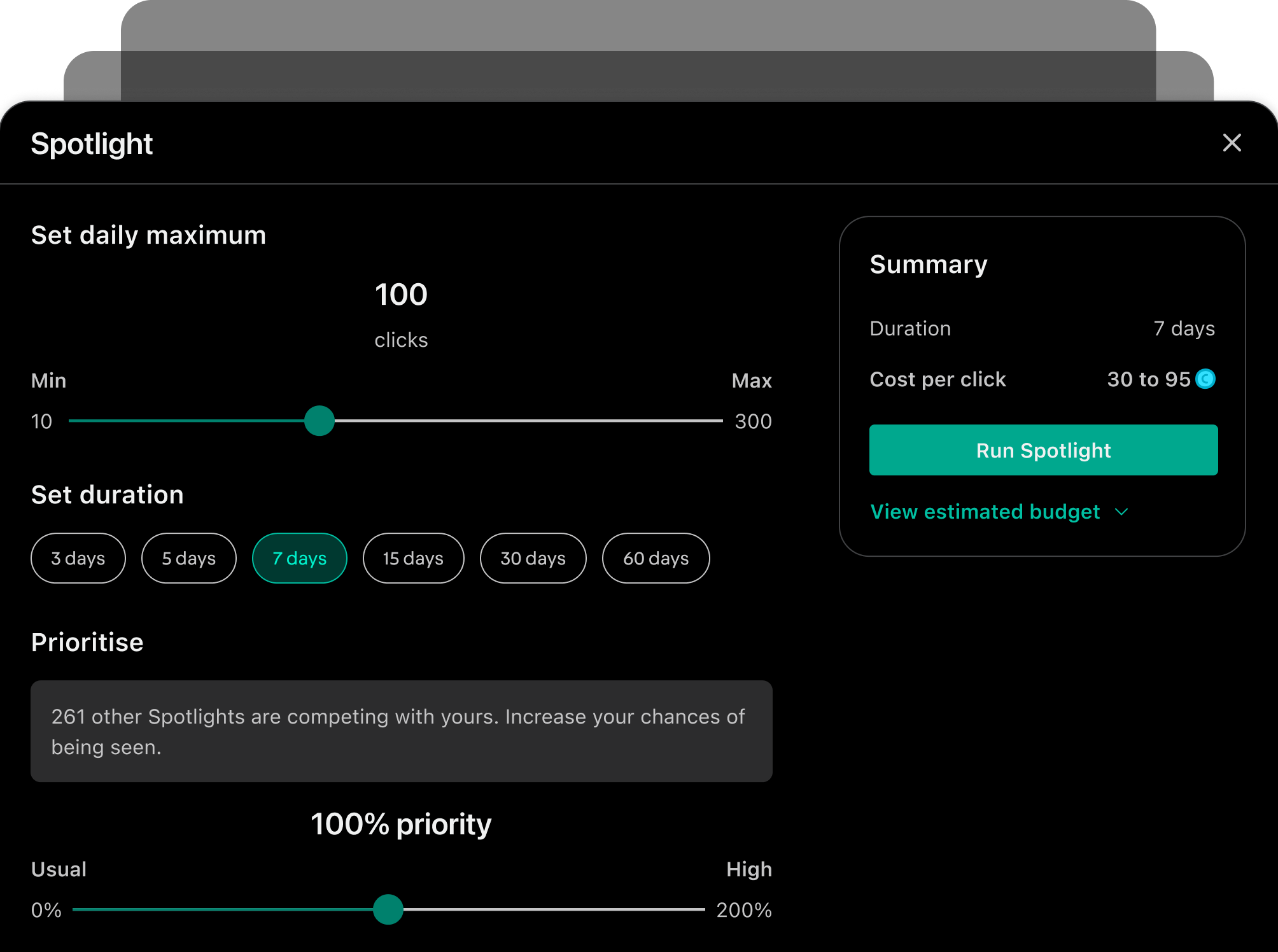
Carousell’s ad suite enables professional sellers to reach more buyers.
I joined the team during its transition from a simple, limited product to a comprehensive suite. With product maturity comes the complexity that requires thoughtful design to ensure simplicity and effectiveness. I led the strategy and executed several improvements over the course of 2 years.
Overall impact
X% purchase uplift from simplified ad mgmt and analytics dashboardXX% ad performance uplift from better buyer experienceEstablished design consistency and Long lasting UX vision for ad products
Role
Design Lead: Execution + management. Team of 2.
Responsibility
Research, Strategy, Product design, Visual design
Timeline
2022-2025
Context
Carousell is a second-hand marketplace connecting casual buyers and sellers. As the platform grows in user base, professional sellers advertise on Carousell to grow their business.
When I first joined the team, improvements to the ad suite were driven largely by reactive and tactical responses to feedback from Sales, customer support and buyer team. To look beyond isolated problems, I consolidated past research and conducted new ones.
Problems
Ad management is manual and complex.
Ad performance is unpredictable due to fluctuating demand and competition. At the same time, ads are often seen as at odds with a good buyer experience.
Sellers find it hard to track and understand ad data.
New Ads platform: An overview
Solution and impact overviewI worked hands-on and mentored a senior designer to redesign and iterate Ads platform in three parts: simplifying ad purchase, improving ad performance for sellers and creating new, more meaningful ad analytics.
The new experience led to a X% increase in ad purchase and XX% improvement in ad performance.
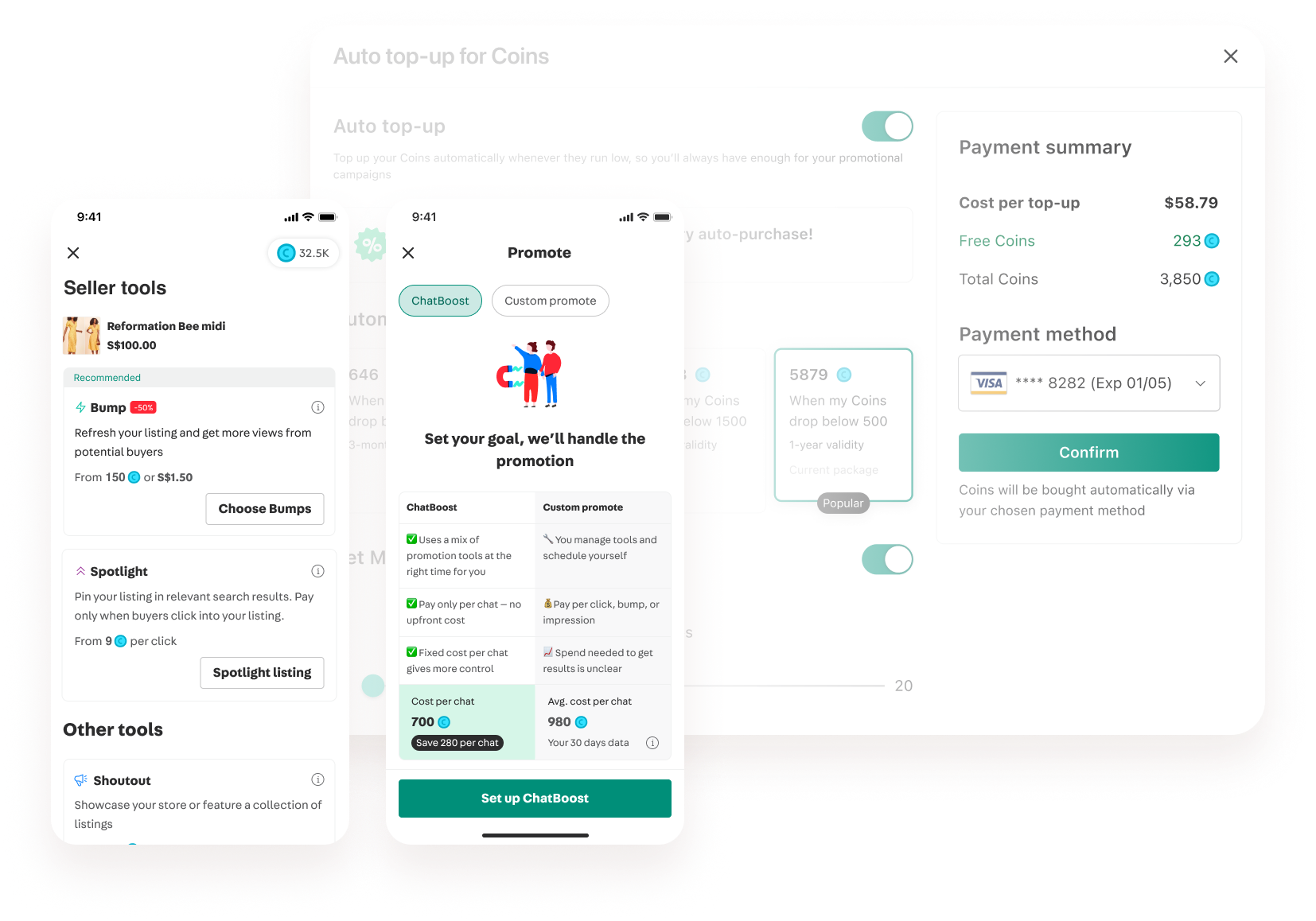
Simplifying Ad purchaseI simplified ad selection, billing workflow and introduced new and simpler ad products.
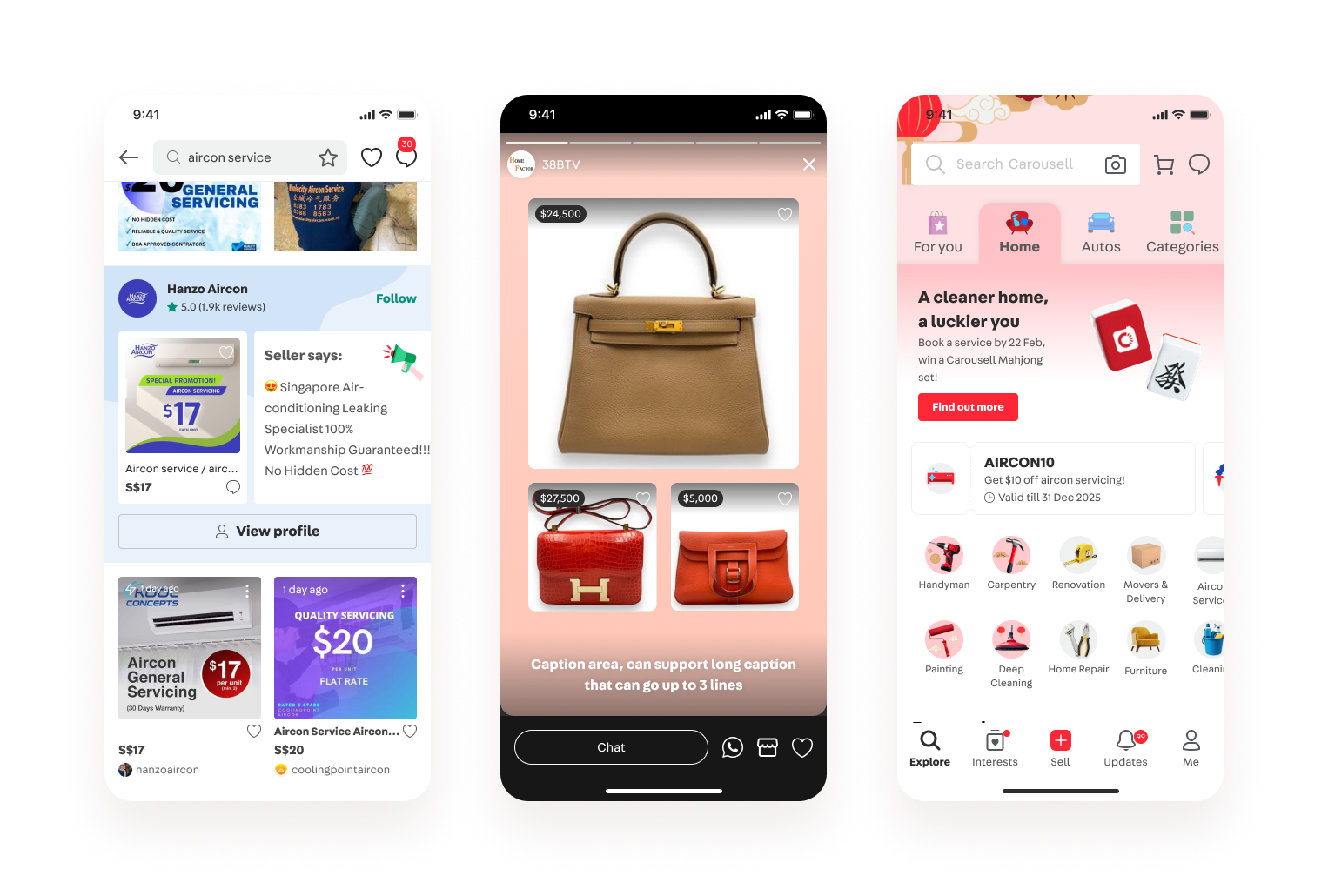
Improving ad performanceI resolved a stalemate between buyer growth and monetization team by focusing on a smarter, intent-based ad experience for buyers
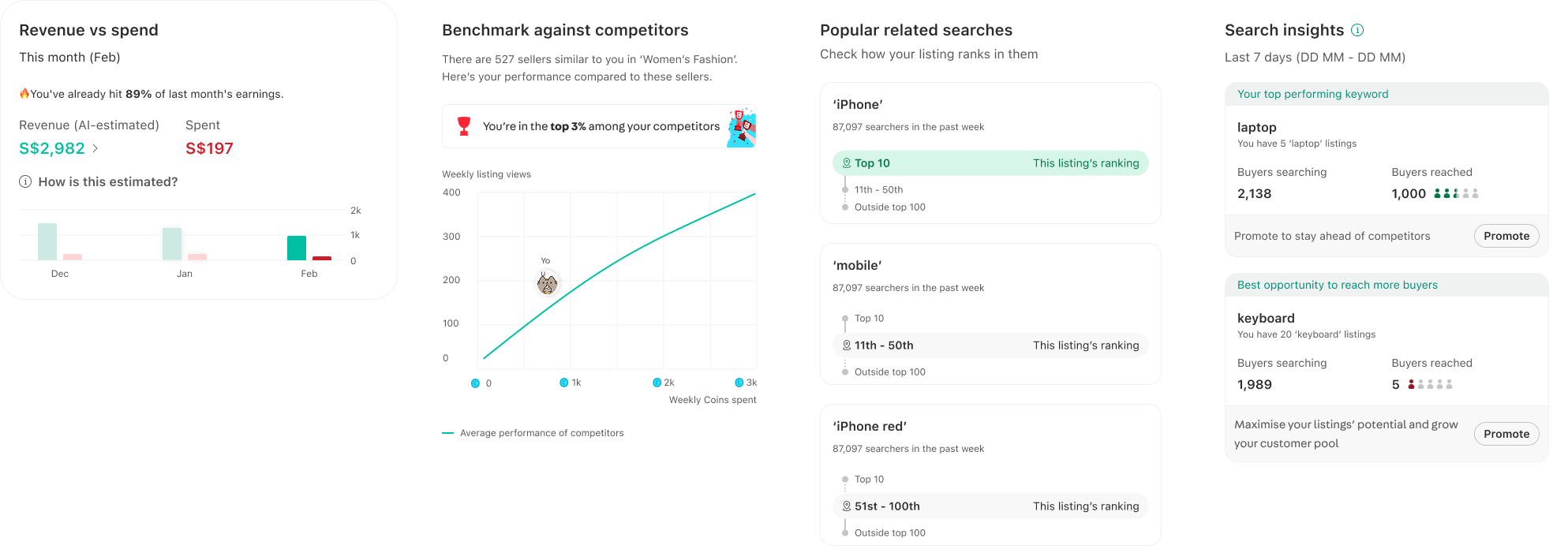
New analytics dashboardI launched a new analytics dashboard with meaningful insights and intuitive data visualization.
Process & iterations
I led the end-to-end design through multiple iterations to redesign existing flows and to launch new products.
01. Simplifying ad purchase
I identified the complexity along the user journey and redesigned not just the screens, but also ad mechanism and billing workflow. We saw X% increase in ad spend from the changes.
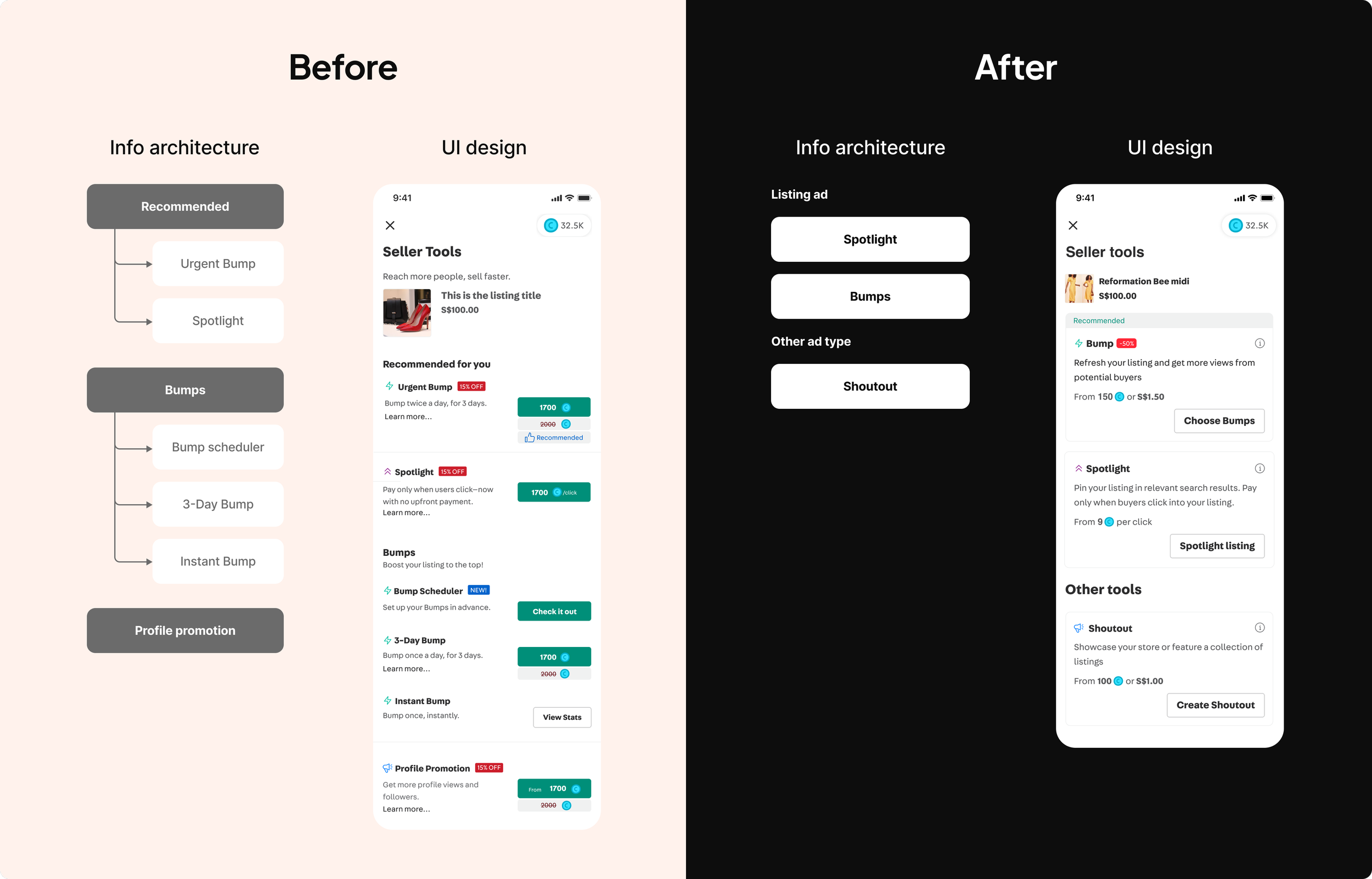
I simplified ad options from 6 to 3 options with better IA.
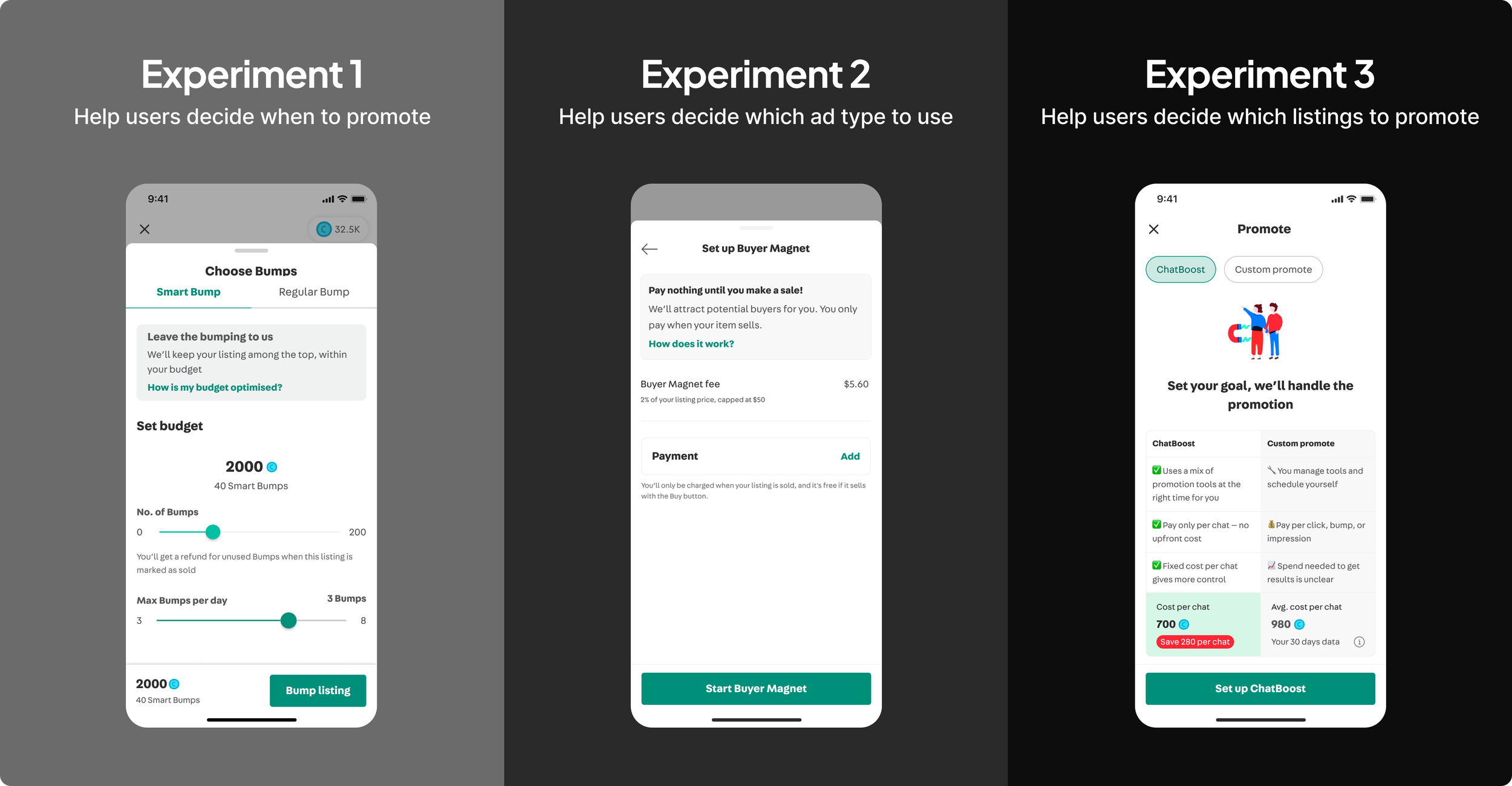
I initiated the concept of smart, outcome-centric ad to simplify ad mechanism. Executed in 3 phases.
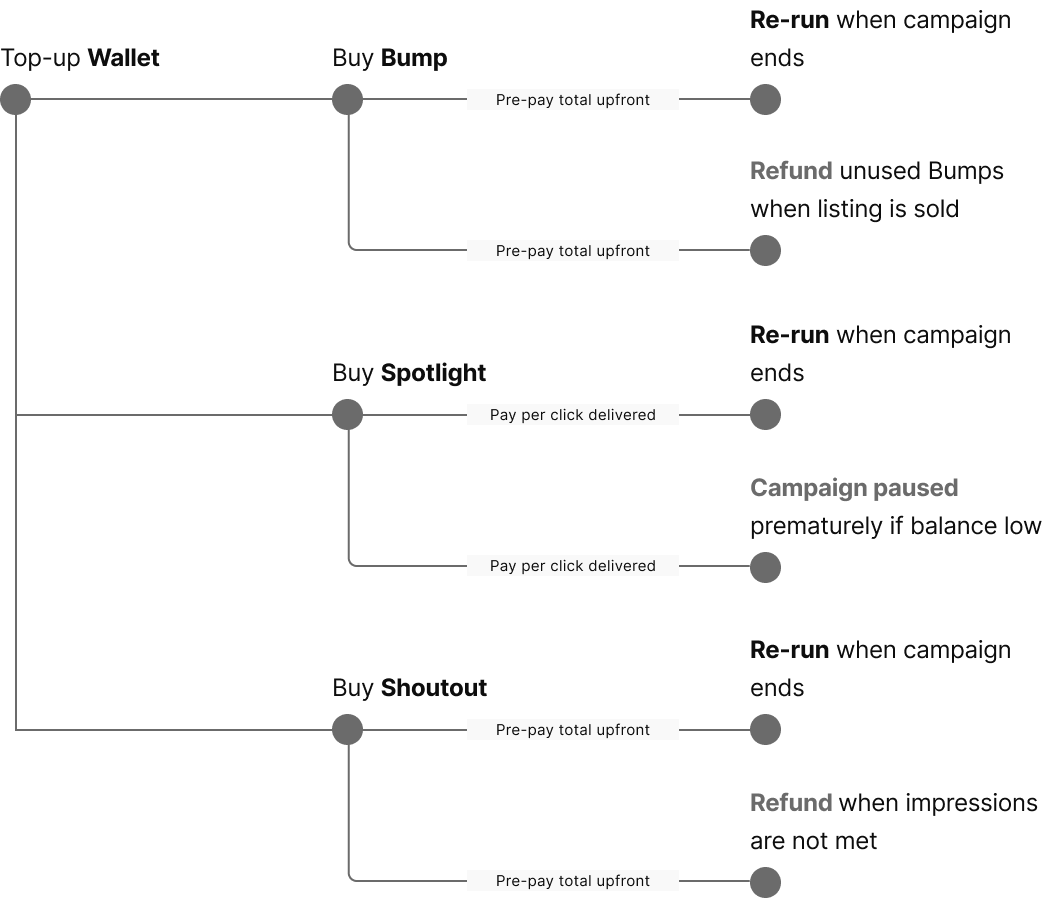
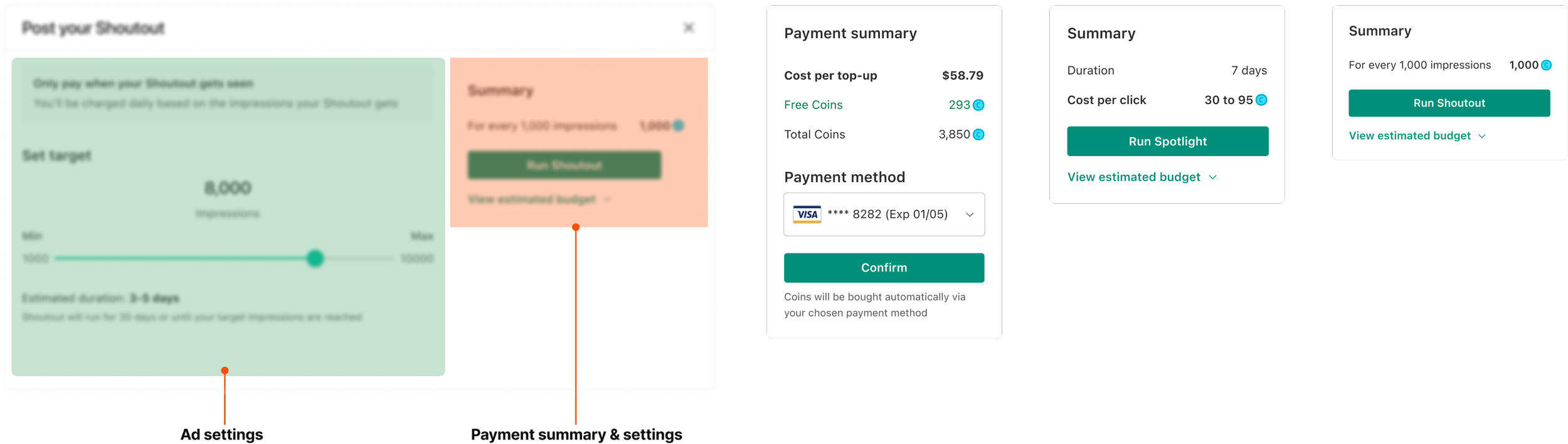
I streamlined billing workflow to create consistency for sellers and eliminate ops overhead from refund and rerun request.
BeforeEach tool had a different billing flow, creating cognitive load for sellers. Unhappy flows that end up in refund and paused scenarios happen often.
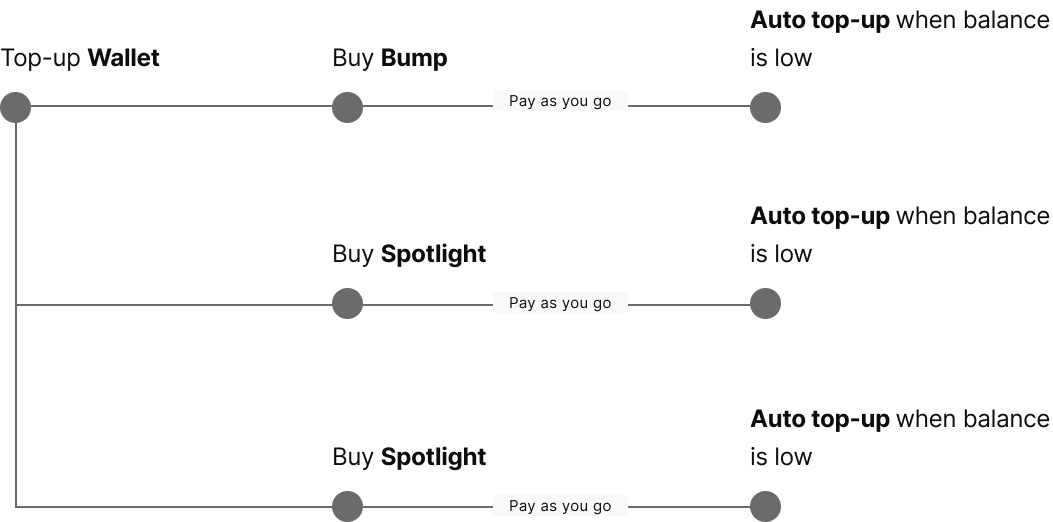
AfterMove all tools to Pay-as-you-go billing removes refund scenarios. Introduced Auto Top-up to increase liquidity and removes campaign paused scenarios.
Design consistency and web-friendlinessI designed a new template for the purchase modal to establish consistency across ad products, especially on web, since the old design was mobile-first and not adaptive.
02. Improving ad performance
My biggest contribution was to shift conversation and execution from “how to show more ads” to “how to make buyer ad experience better”. The changes led to a XX% increase in ad engagement.
I resolved a stalemate between buyer growth and monetization with a buyer intent <> ad content framework.
Observed a stalemate in collaboration with buyer team, I discussed with my manager and we came up with a framework to align the user goals in both teams.
Monetization: “Let me show more ads!!”
Growth: “You are eroding buyer experience!!”
Stalemate
We challenged that ad has to be disruptive to the user experience.
To make ad performs better, we need to reframe “make ad performs better” to “make buyer experience for ad useful”, by aligning the buyer intent with ad content.
Reframing
Ad content <> Buyer intent framework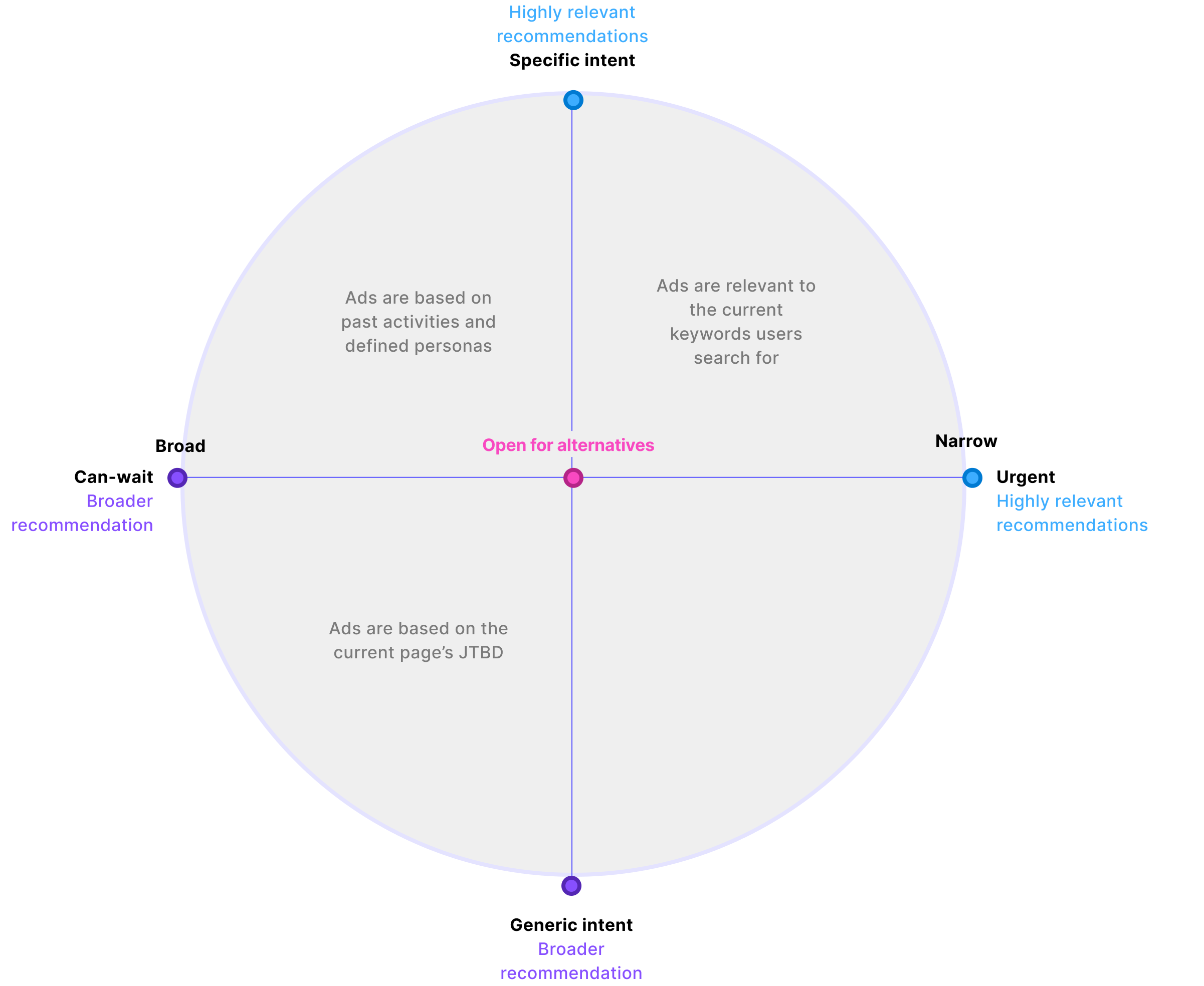
Application examples: Backend ad serving logic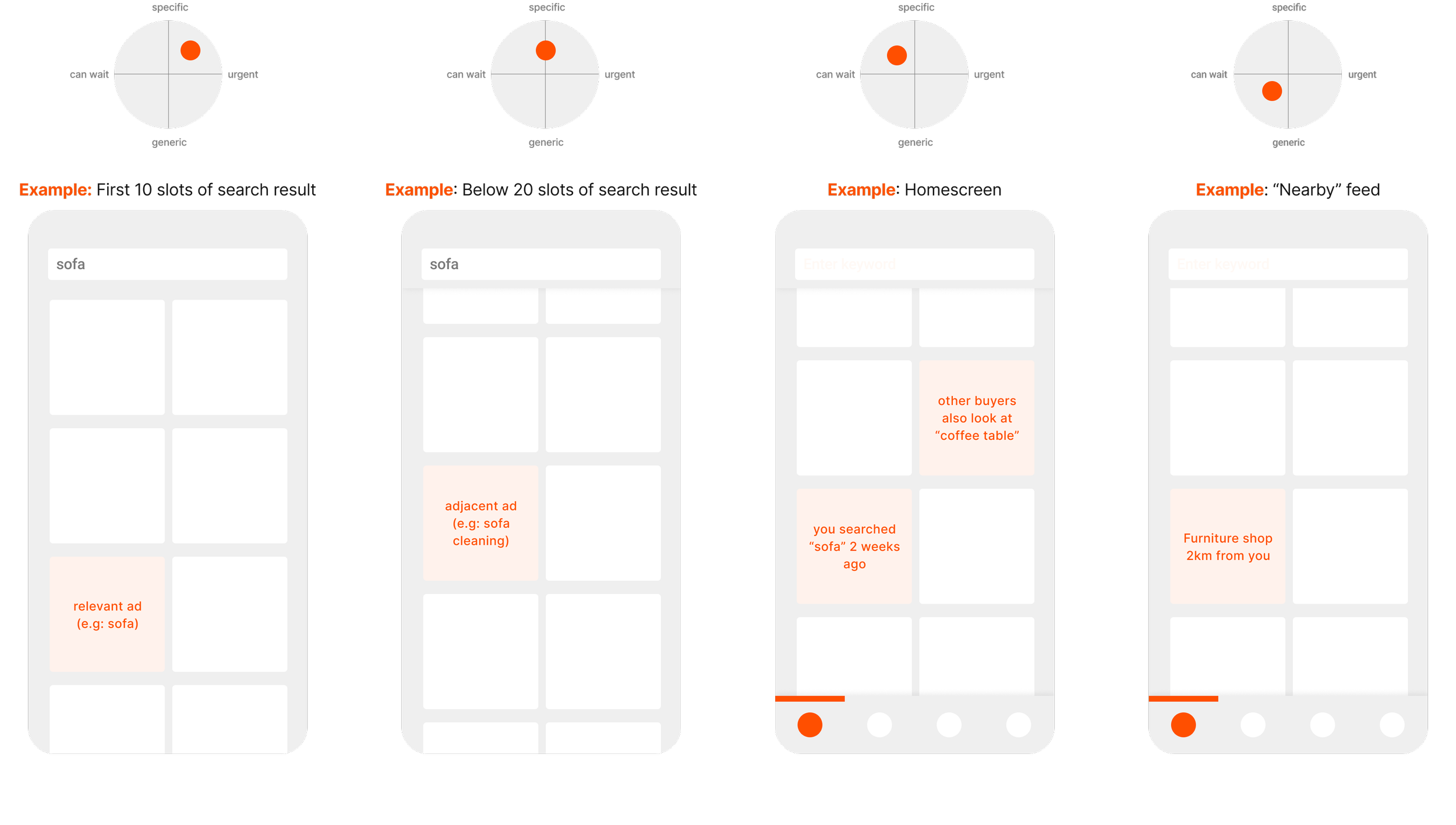
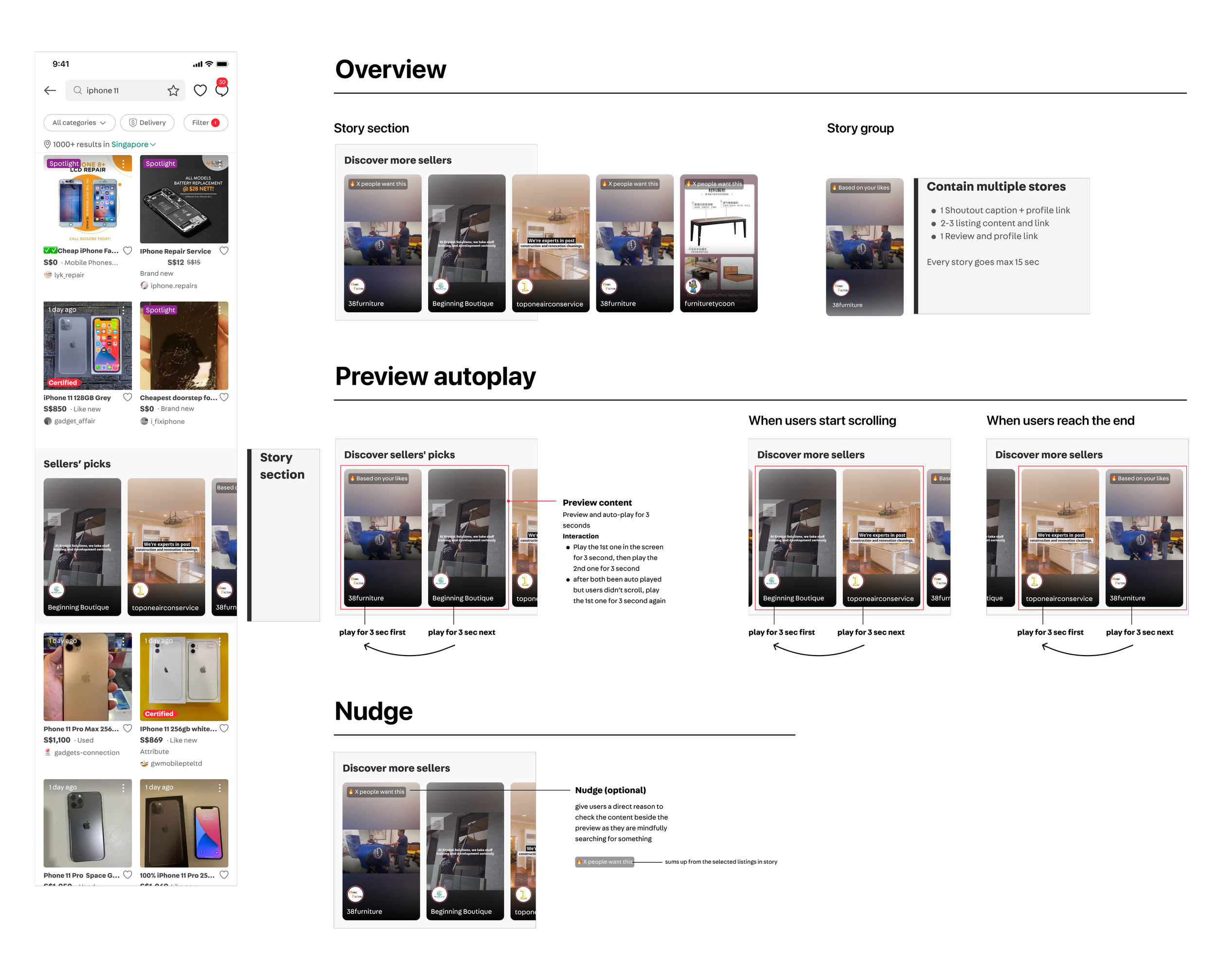
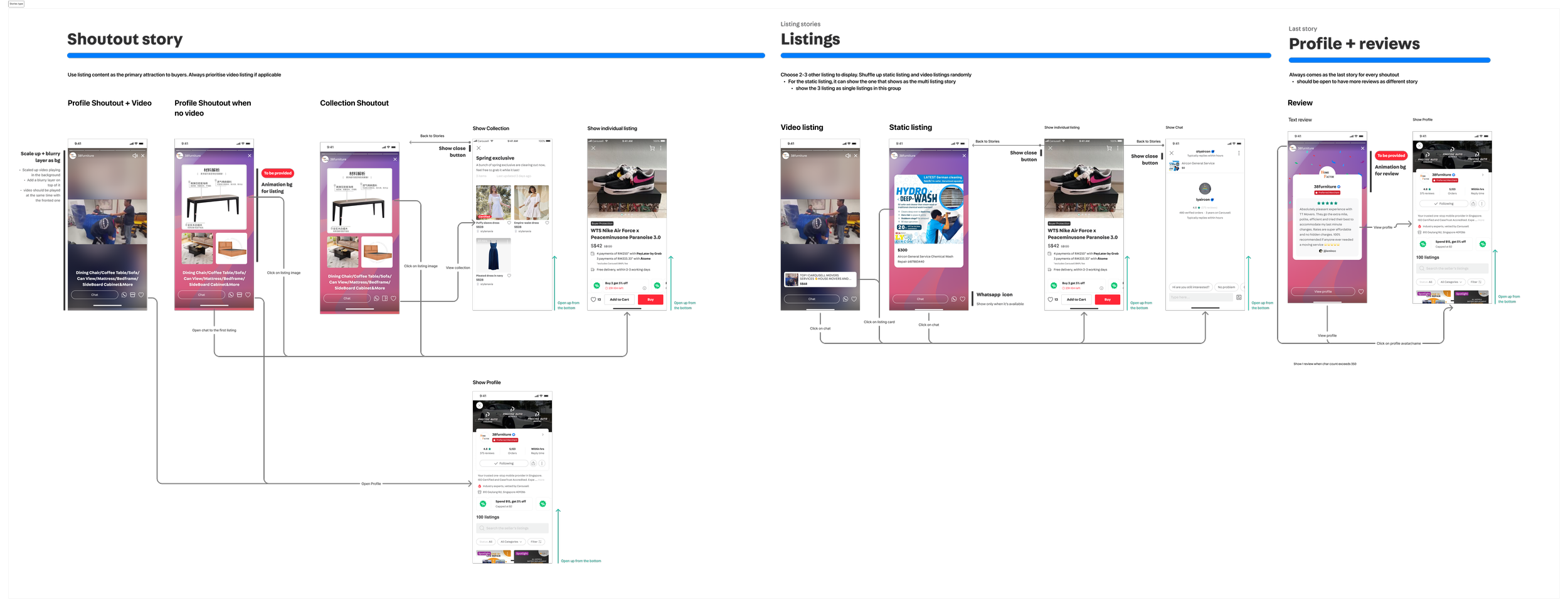
I redesigned the buyer-facing UI to make ads engaging and useful for buyers .
Experiment 1: New ad UI with better product clarity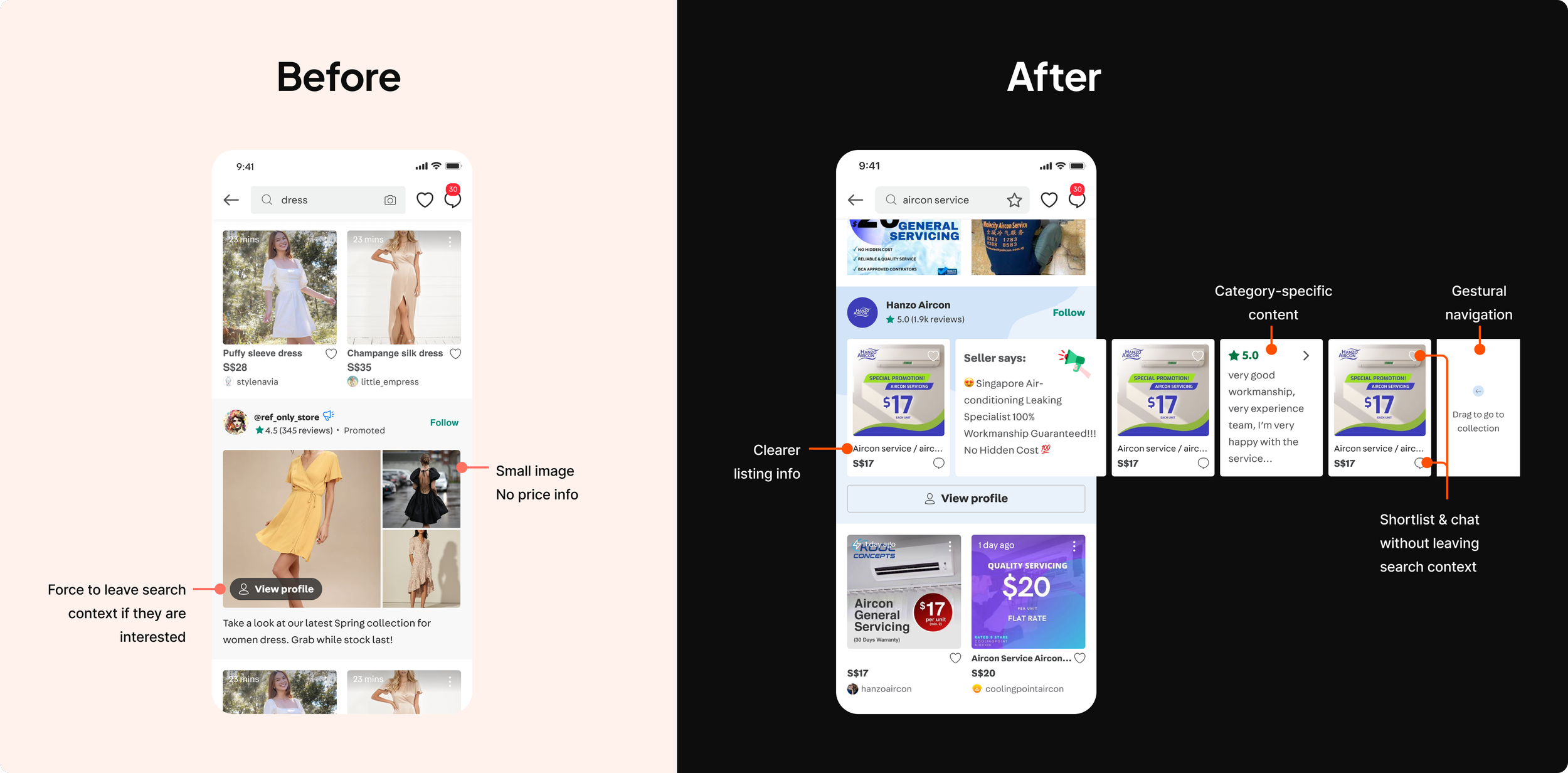
Experiment 2: introduce media-rich ad format 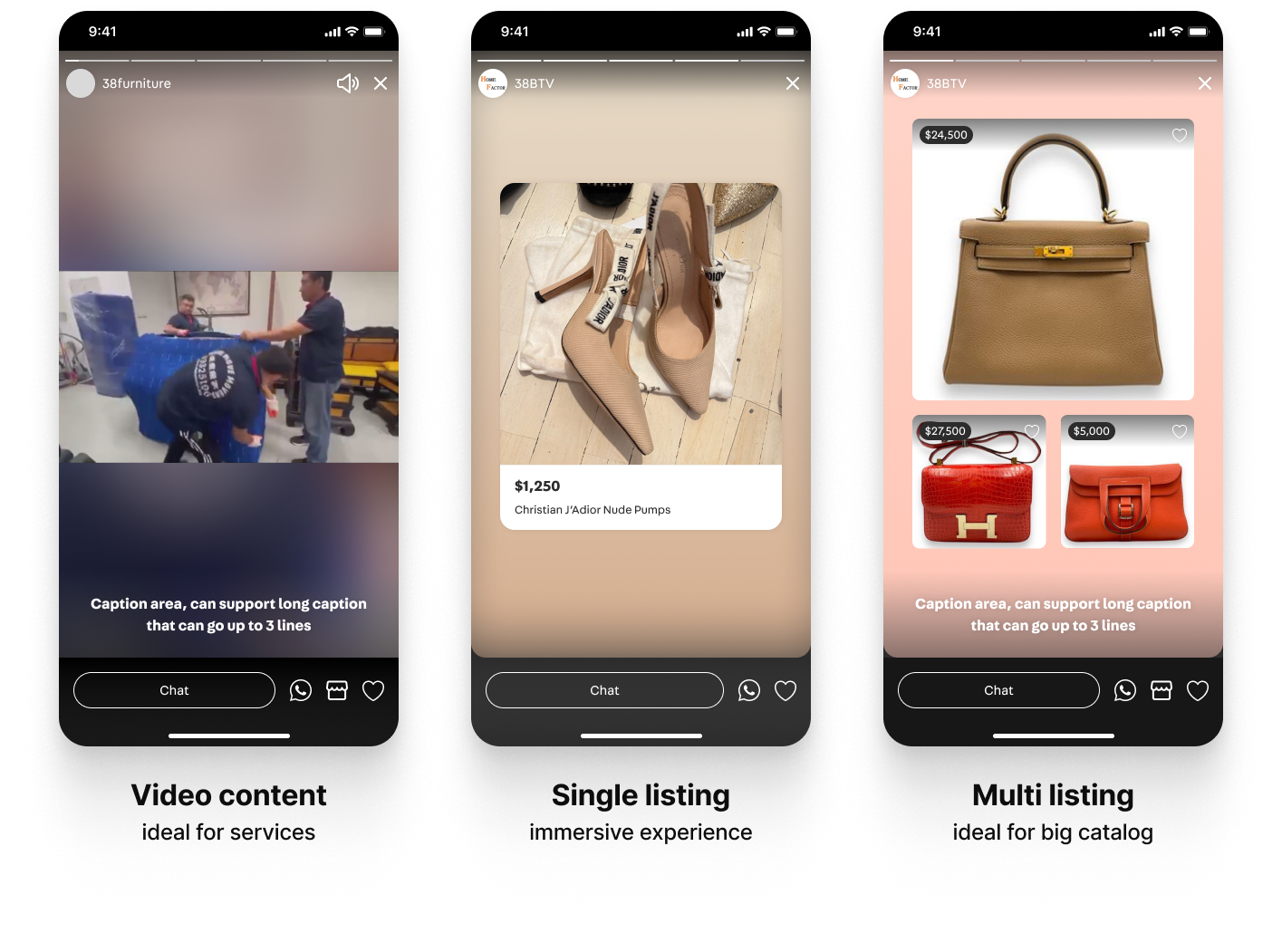
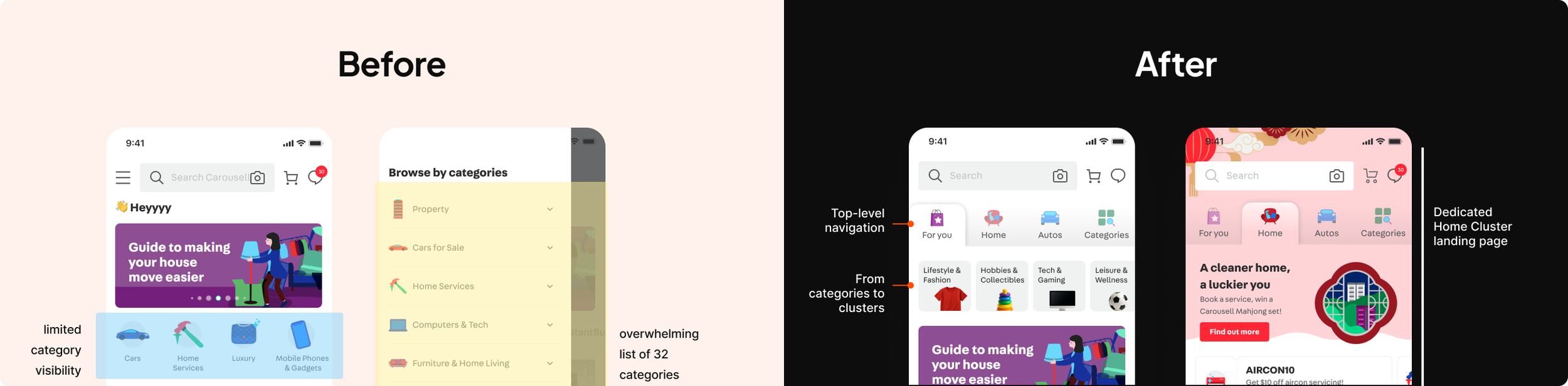
I shipped a homescreen navigation change to encourage buyer discovery.
A Mismatch in supply & demandFrom data, I discovered the root cause of low ad performance: Buyers come to Carousell for high-frequent and low value categories, while top ad spends are in low-frequent and high-value categories.
A cluster approachI worked with my manager to group related categories into clusters. This group helps buyers from high-frequent categories like Furniture to discover low-frequent but high ad spending categories like Home Services.
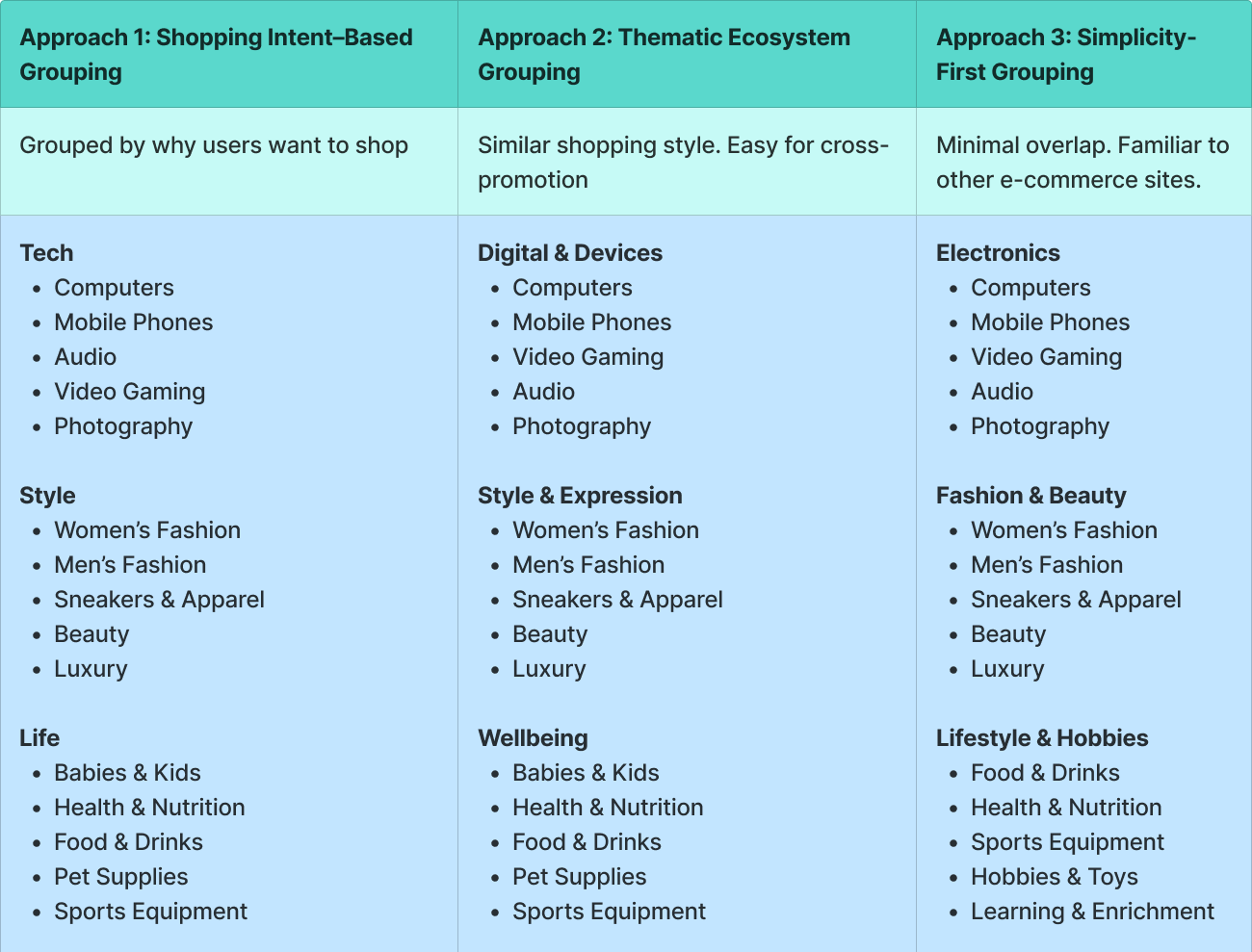
The navigation change & dedicated cluster pageFrom a flat list of 32 categories to 6 clusters, each with dedicated landing page.
03. New analytics dashboard
Previously, understanding ROI and impact of Carousell Ads was difficult as data was fragmented and unintuitive. I led the launch of a new analytics dashboard that increased purchase page visit by XX% and ad purchases by X%.
Understand sellers’ data needs and existing behaviours to inform IA and new analytics
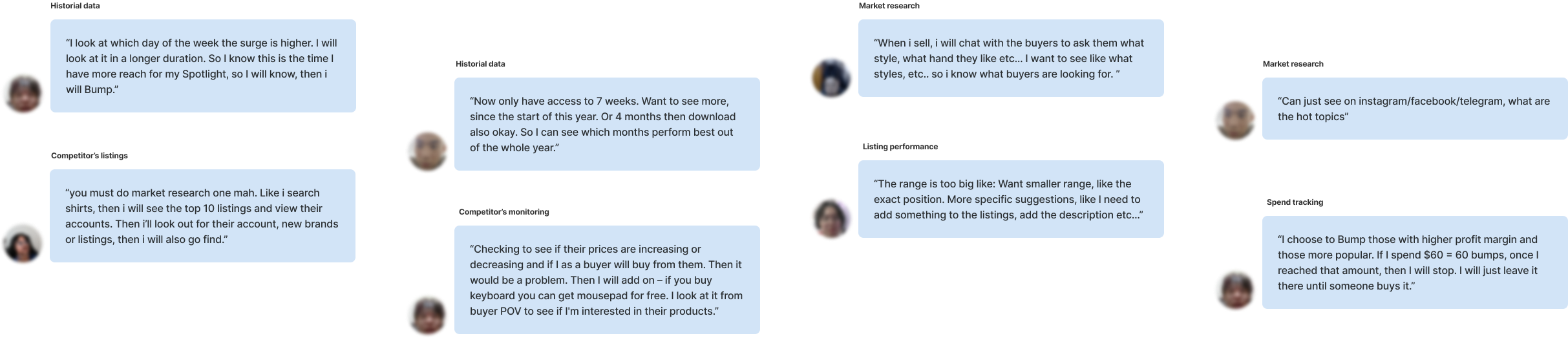
I mentored a senior designer and shadowed to support her in interviews.
The synthesis along user journey informed the IA of the seller’s insight dashboard.
Needs and Opportunities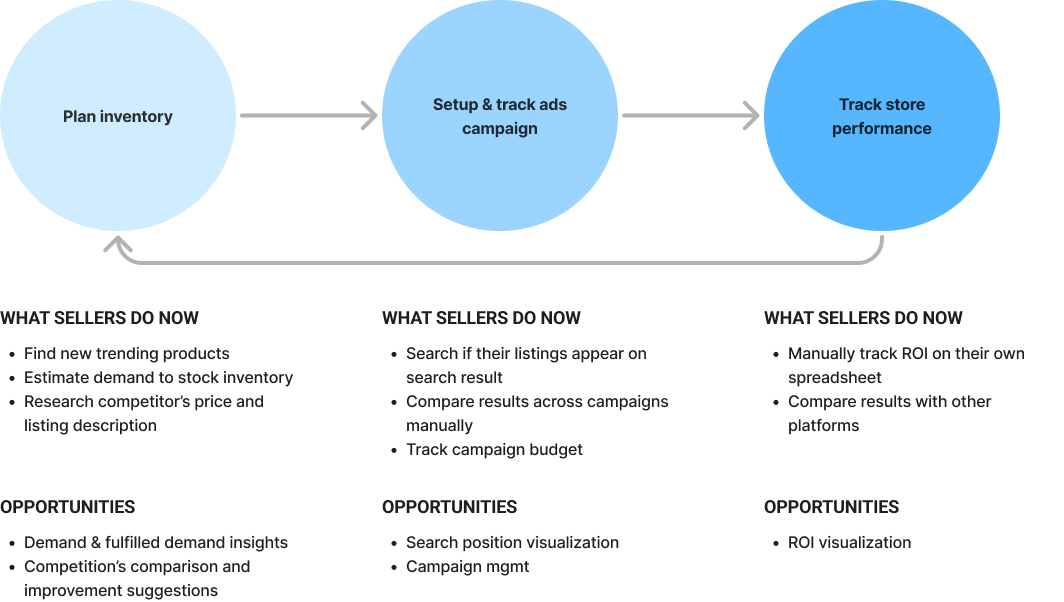
IA informed by JTBDs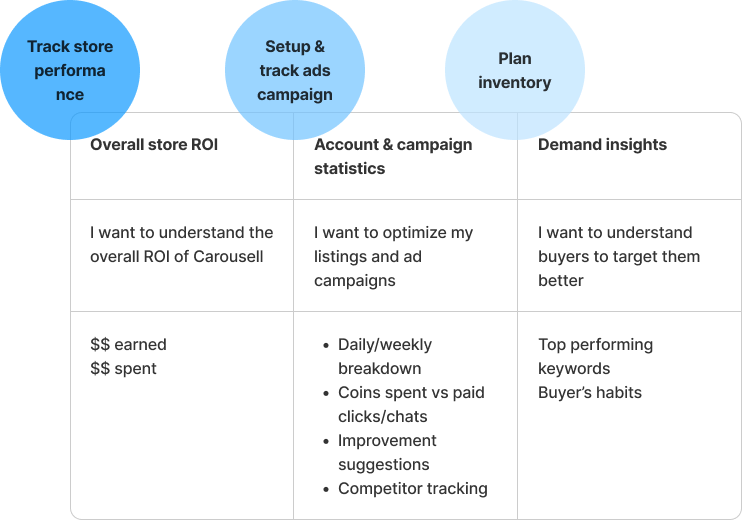
I aligned with the working team on the principles for meaningful data visualization.
More intuitive, less ‘mathematical’
Prioritize actionable over accounting accuracy
Simple, # simplistic
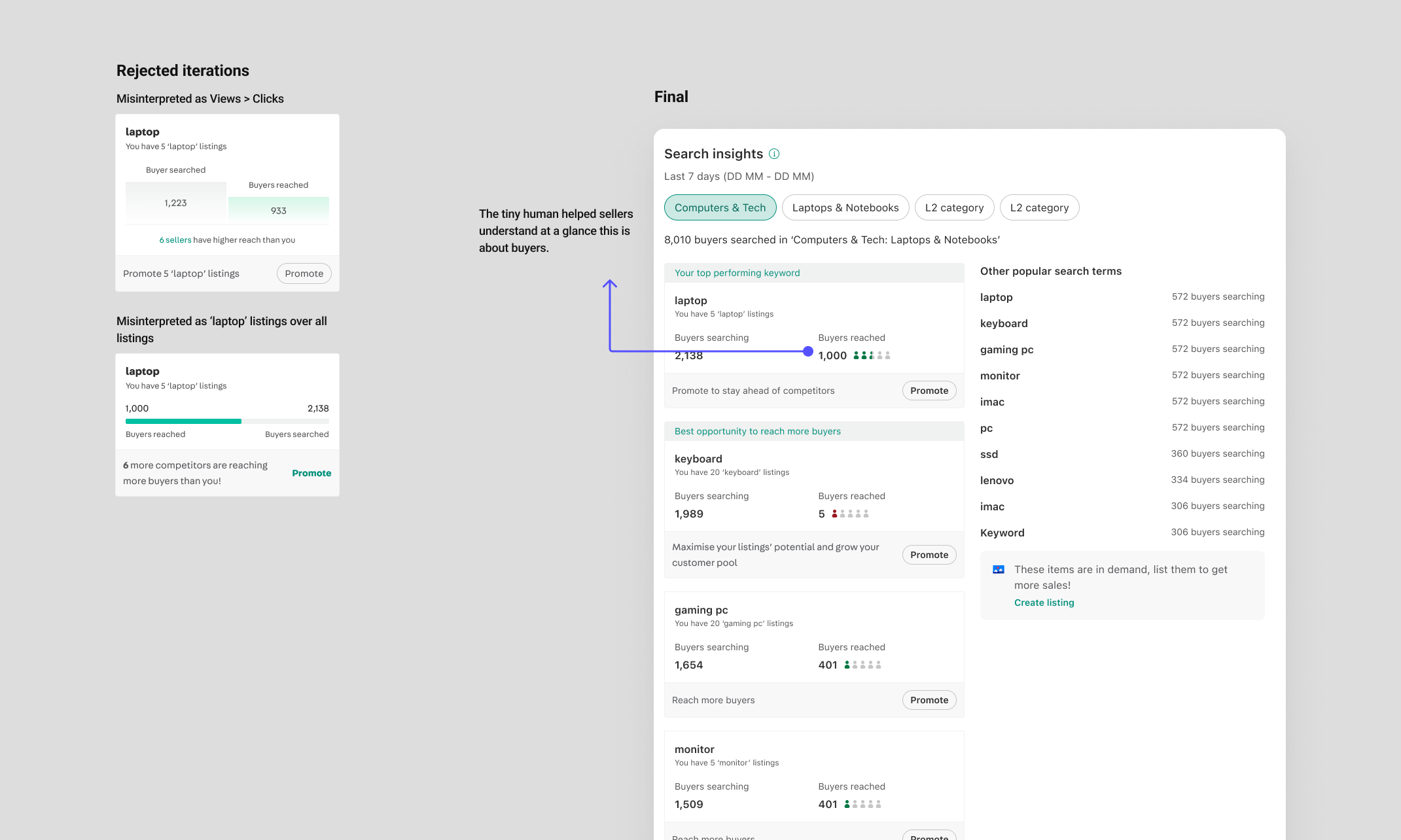
Explorations & rejected versions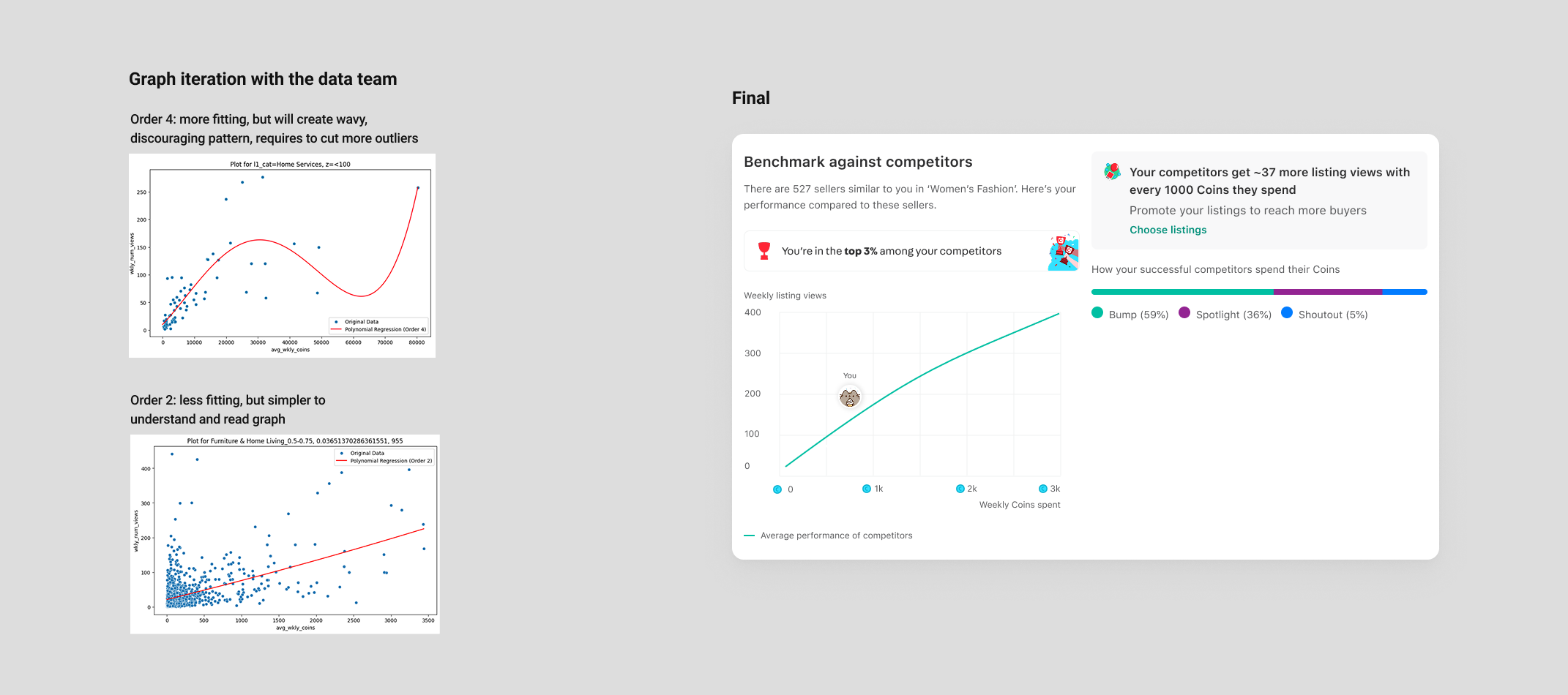
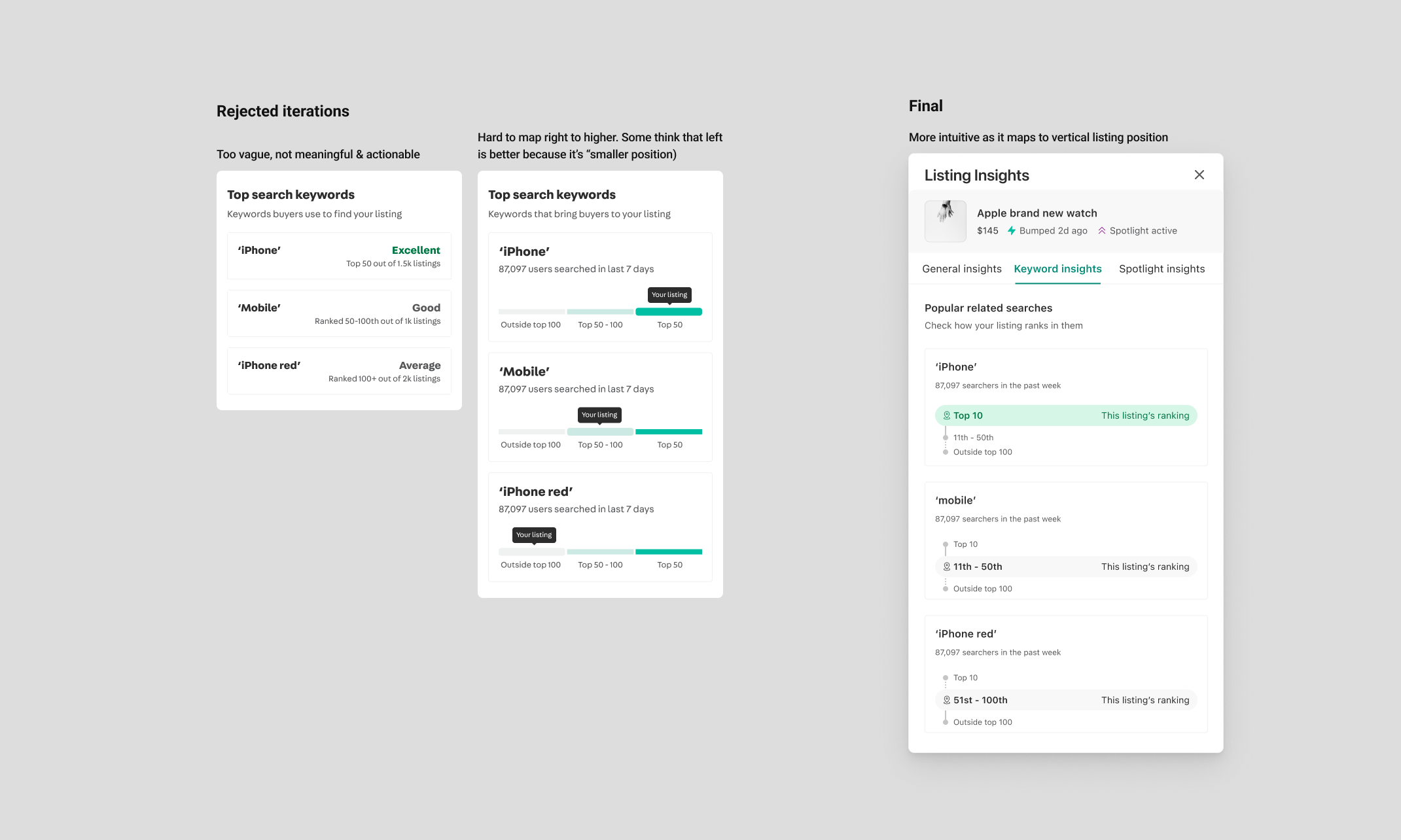
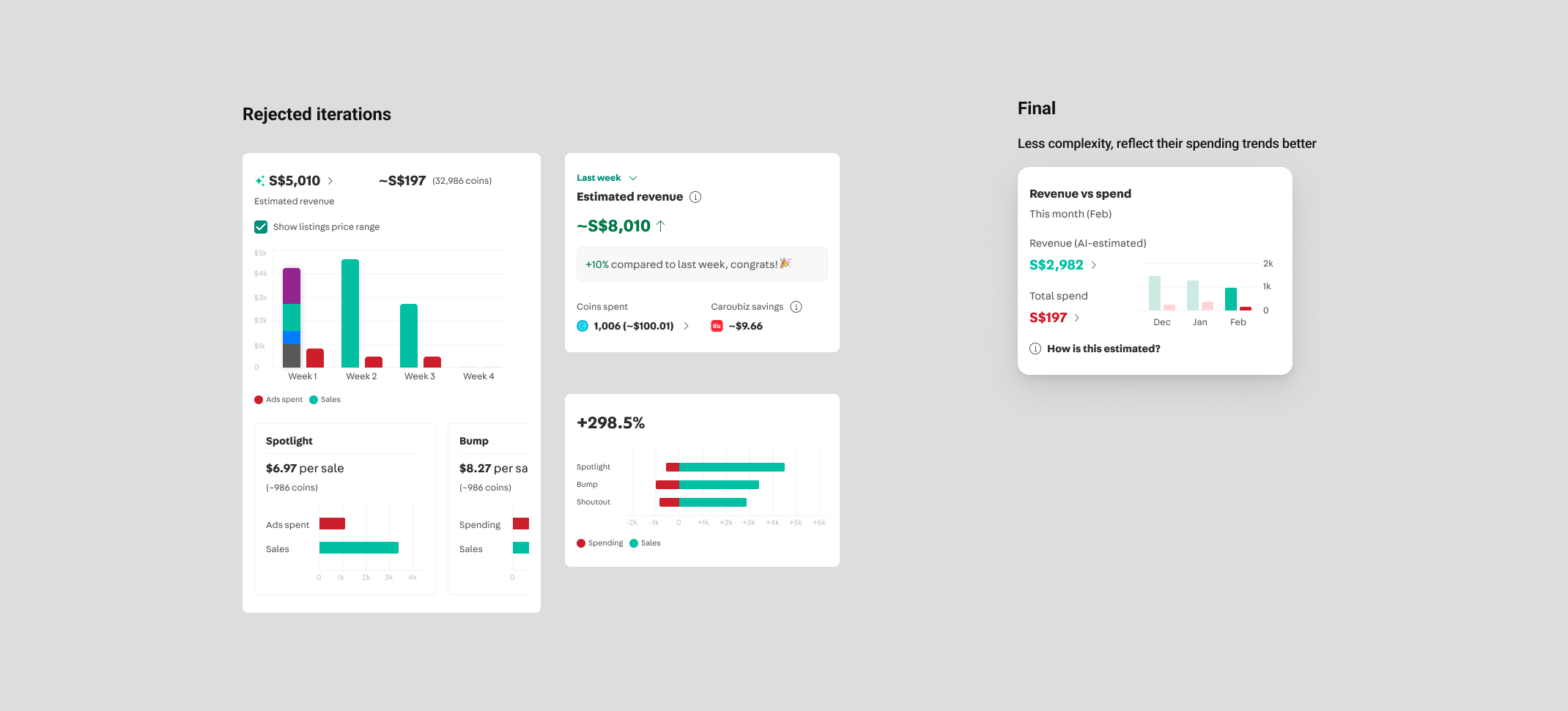
Final Data visualization modulesImpact
Each iteration drives both revenue and user experience impact hand-in-hand. Cumulatively, we saw:
X% purchase uplift from simplified ad mgmt and analytics dashboarDXX% ad performance uplift from better buyer experienceEstablished design consistency and Long lasting UX vision for ad products
Go to next project