Carousell
Professional Account launch: Maintain trust while monetize with AI
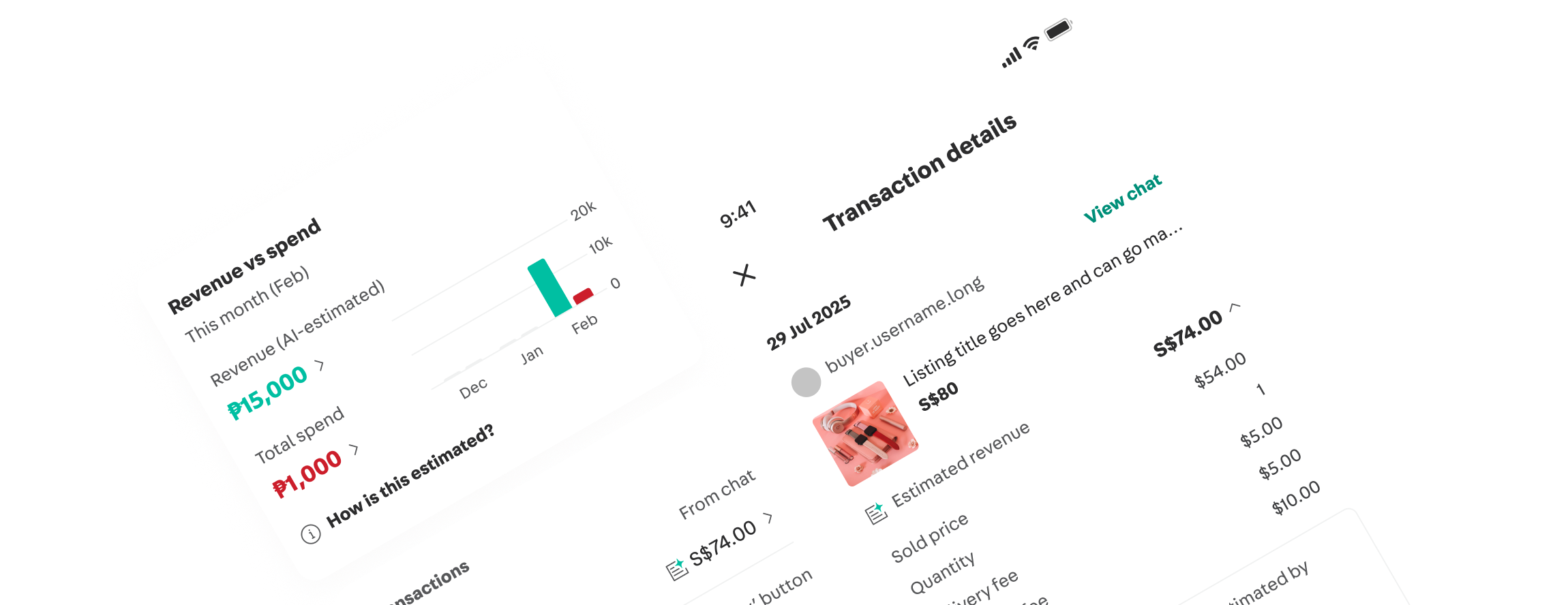
Pro sellers choose Carousell for the human connection: closing deals via chat feels personal and effective. However, to sustain the platform, the business needed to monetize this off-platform volume using AI detection in chat.
As the same policy has not been done anywhere else, the stake for user trust and experience is high. I led the effort to research, frame and execution design on this new policy to monetize, while maintain trust, transparency and value to users.
Overall impact
Generated 0→ 5-figure MRR in 1 quarter, with minimal dispute, beating conversion forecasts.Pivoted GTM strategy from "getting fair share" to "value-first" based on research
Role
Design Lead: Execution + management. Team of 2.
Responsibility
Design Governance, IA, Product design, Visual design
Timeline
Nov 2024 - Mar 2025
Context
As Carousell started out as a consumer buyer-seller marketplace, users have a habit of dealing off-platform via chat. This made it hard for Carousell to detect a transaction and charge a transaction fee. With LLM, detection of transaction done via chat is now possible.
Challenges
This type of policy has not been done anywhere else:
How might we make sure this is the right policy?
How might we manage users’ reaction?
How might we communicate and educate users on the new policy?
How might we give users more values, not just more bills to pay?
Design influence over roadmap and GTMI conducted research and shared design POV that influenced the roadmap in 2 major ways:
We wait to built trust with sellers through transparent and auditable AI-detected transaction first, before invoicing sellers
After the first invoice is released, we follow up with additional value-adding features for sellers.
Design-lead GTM
Self-declare As pro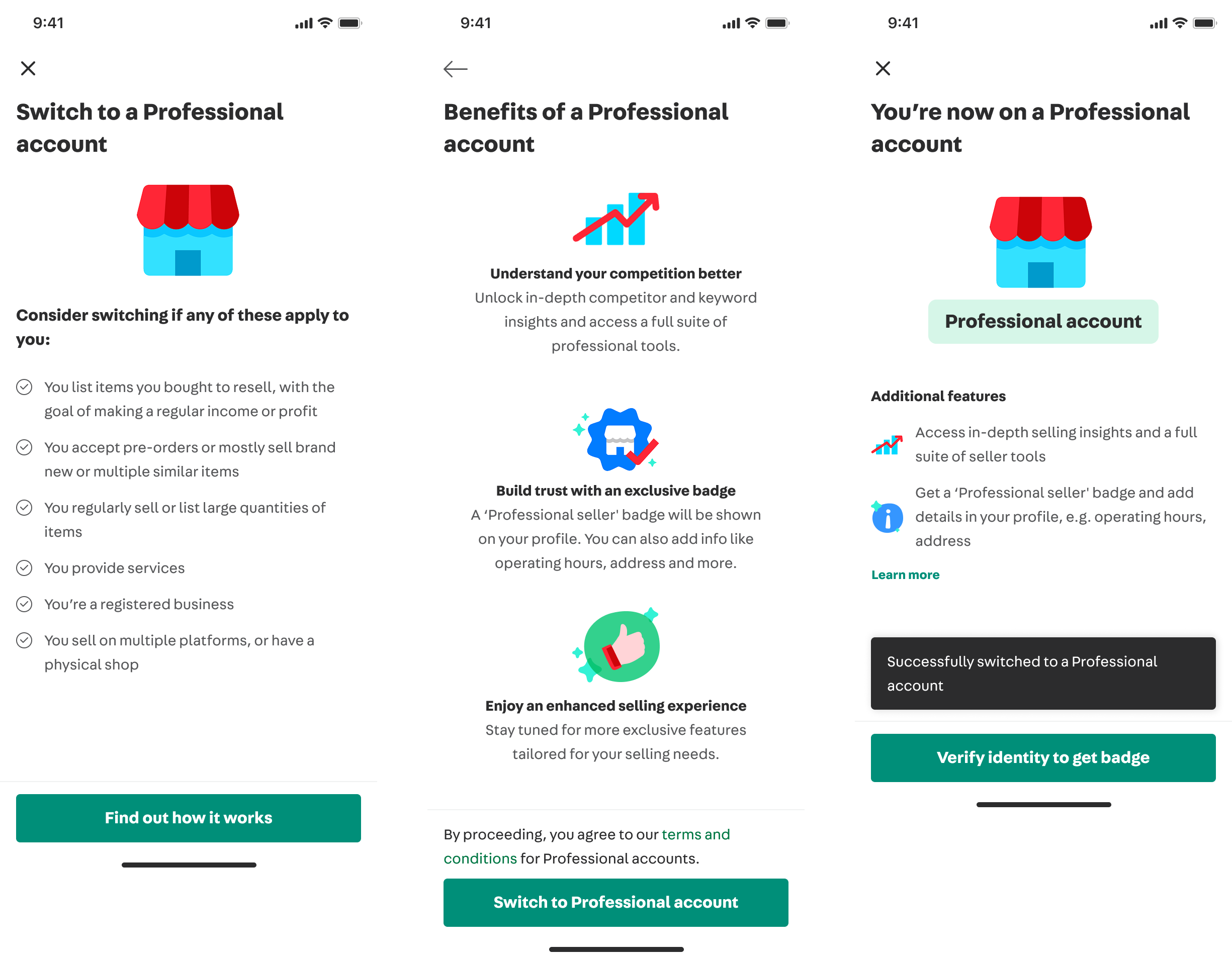
Payable invoice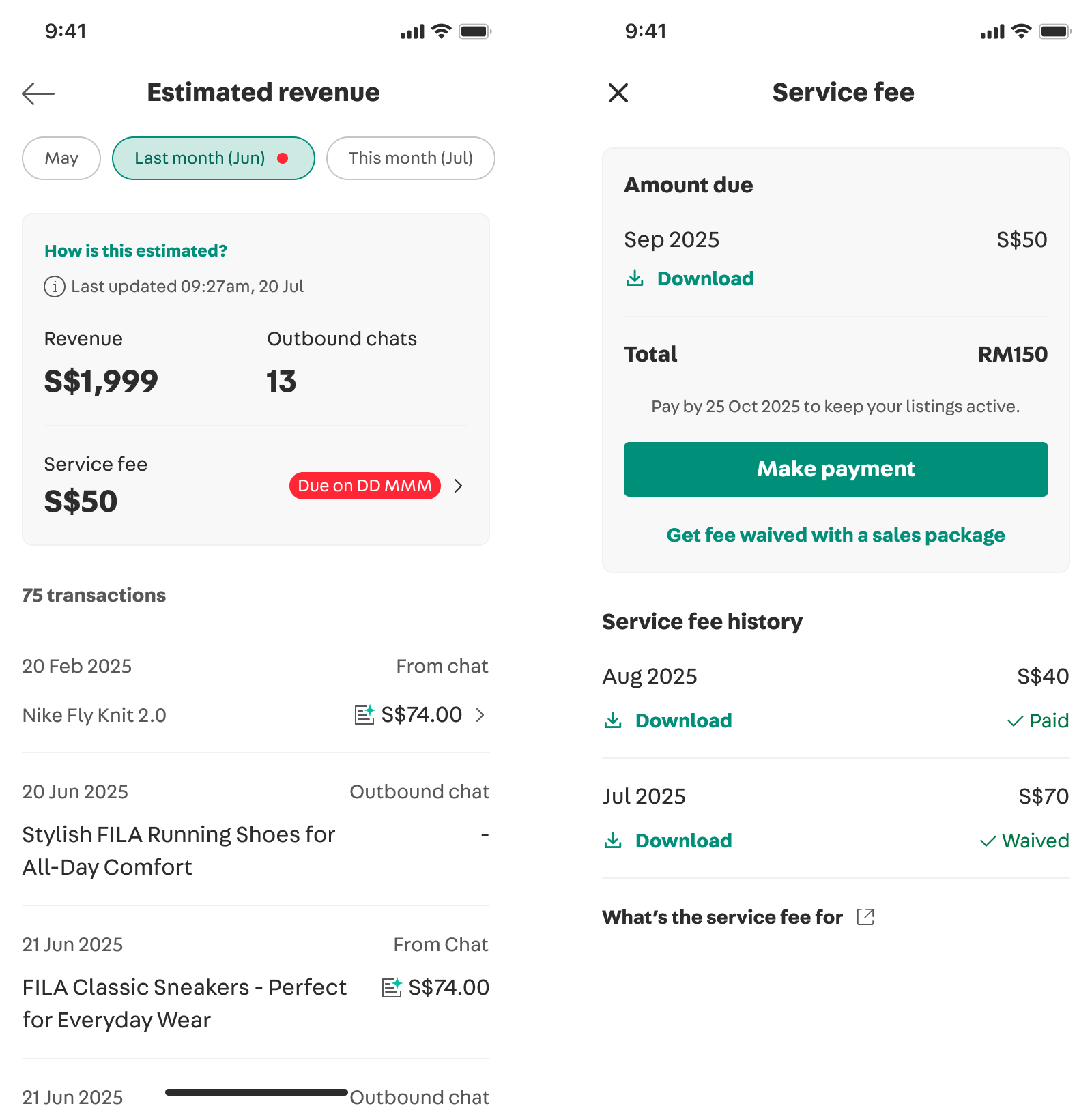
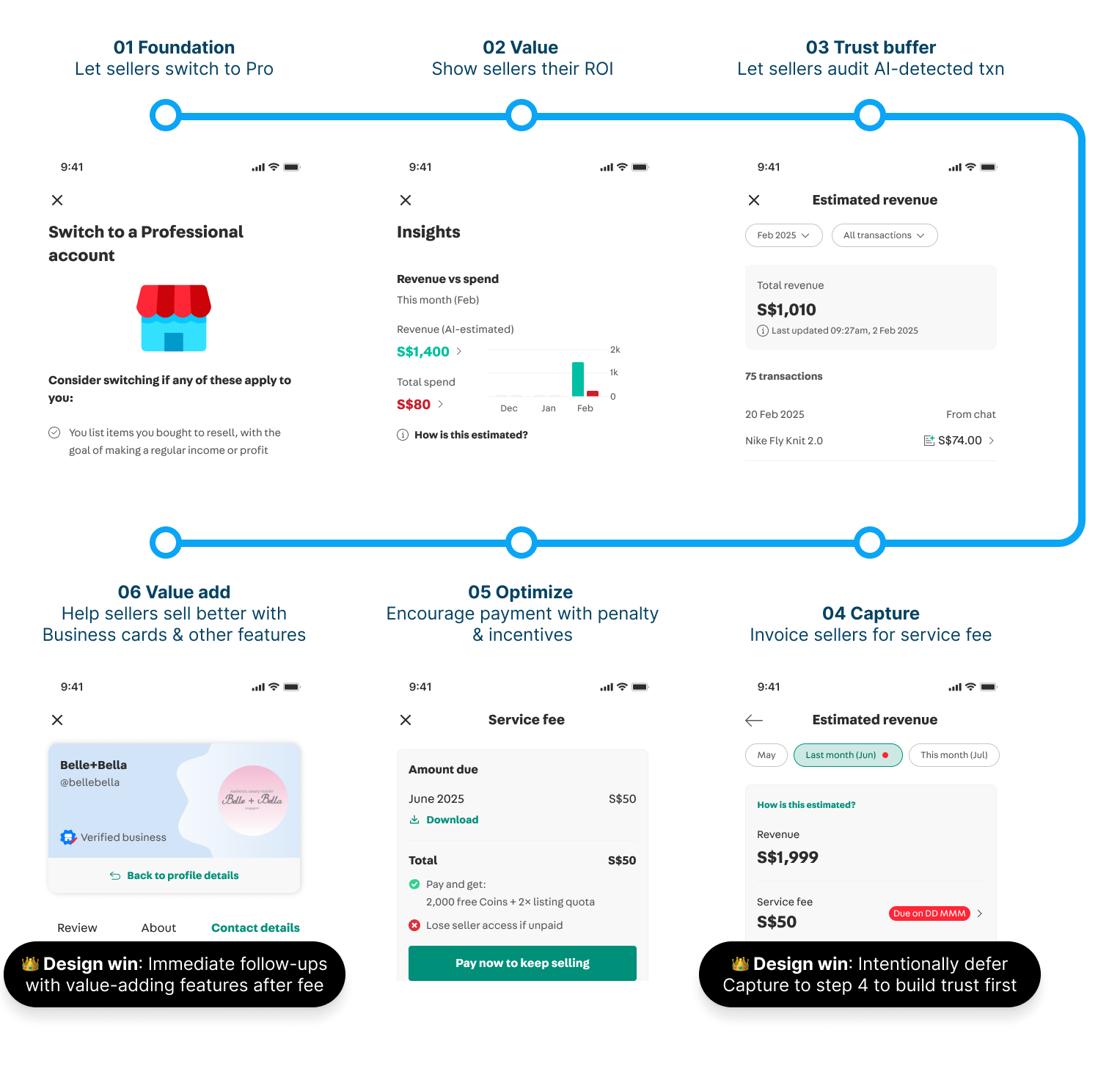
ai-detected revenue & ROI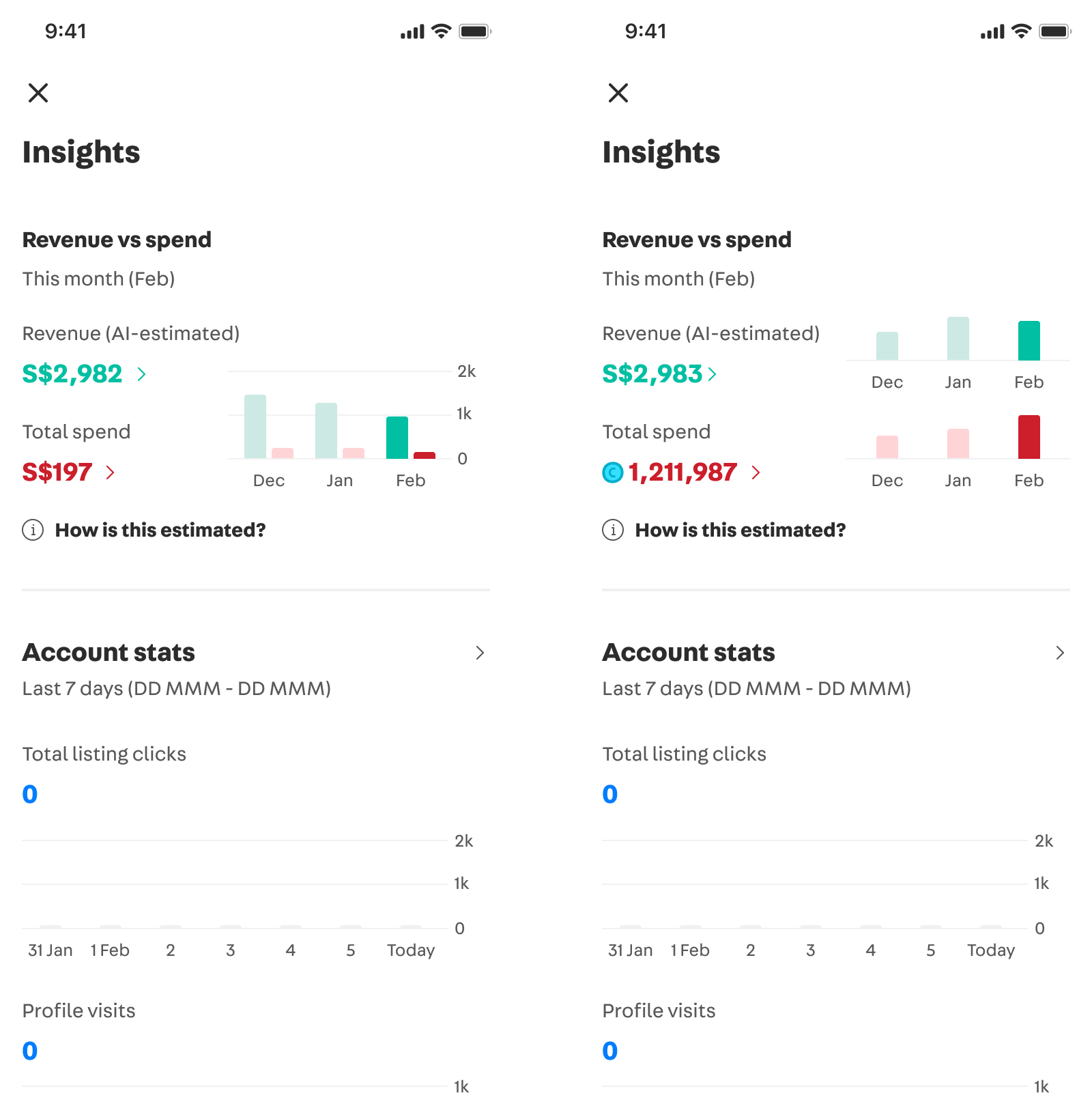
Incentive & penalty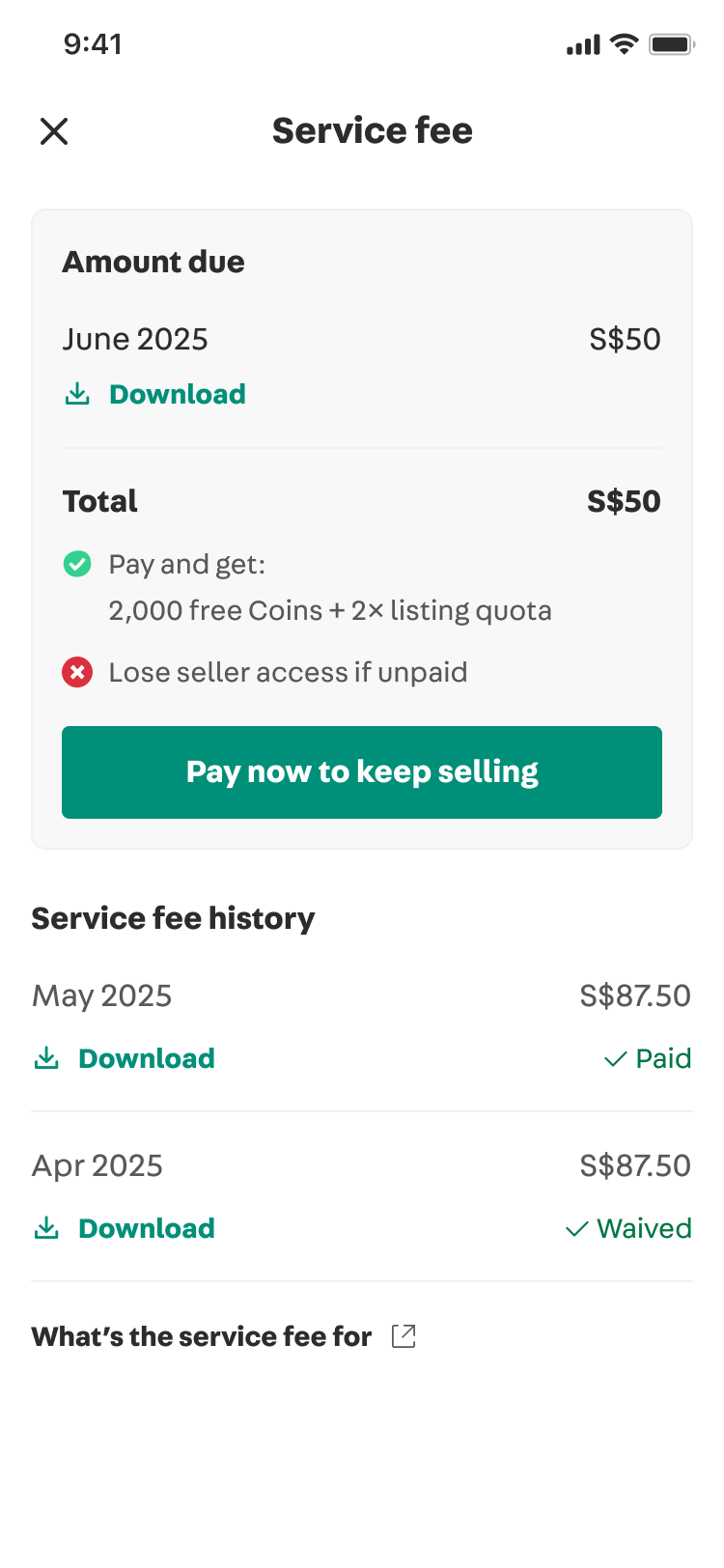
auditable ai-detected txn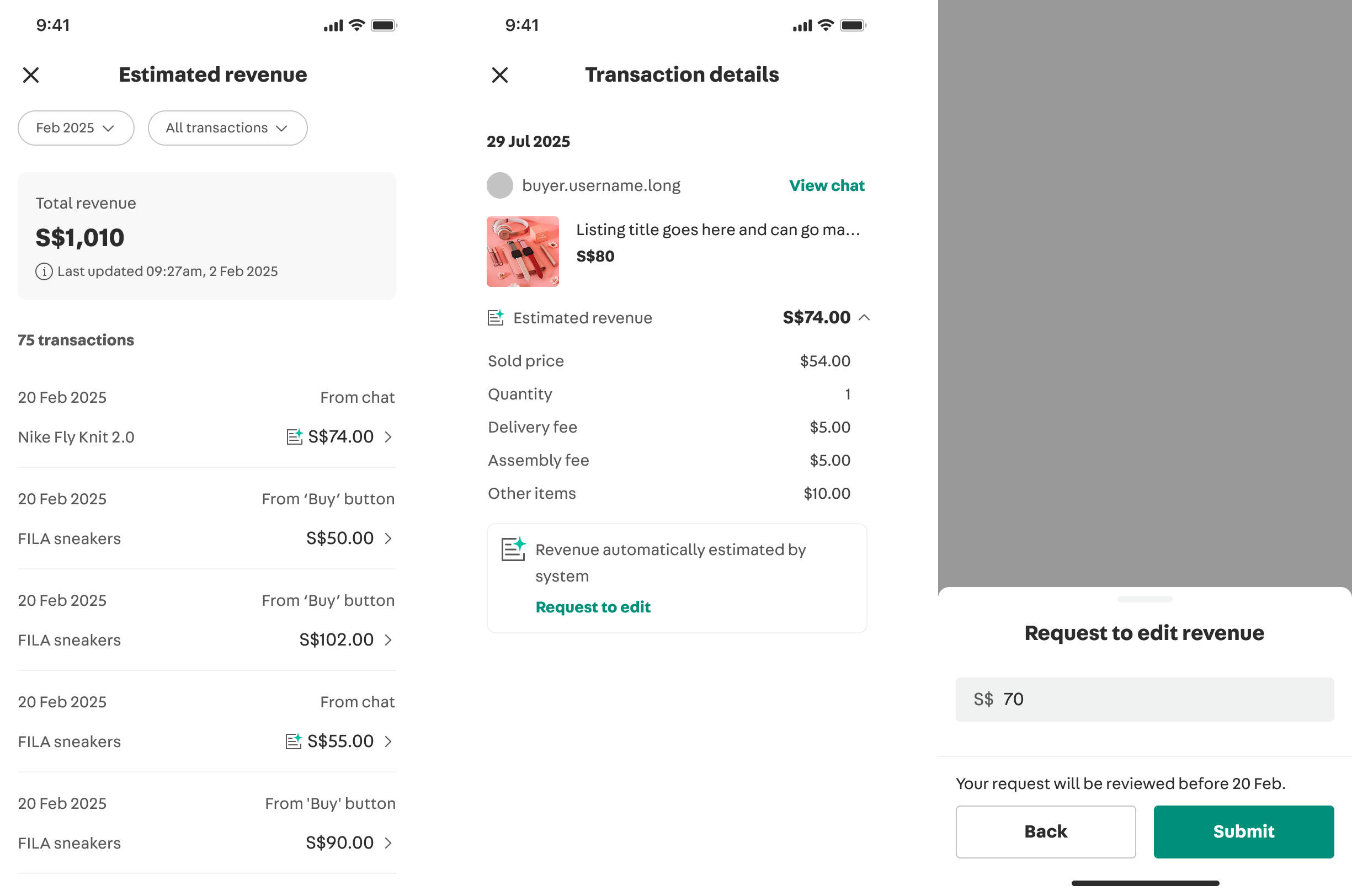
Business cards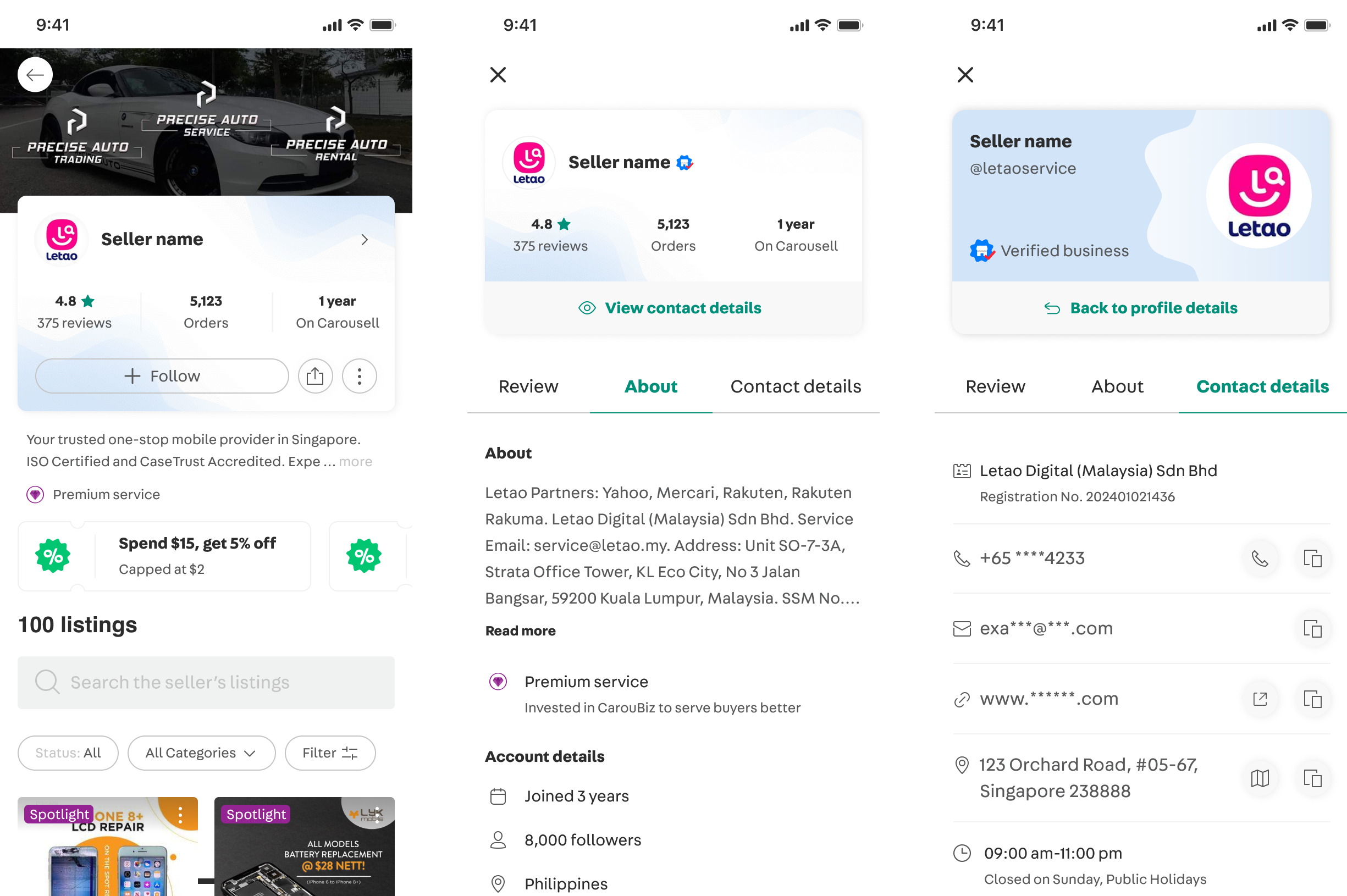
Selected highlights
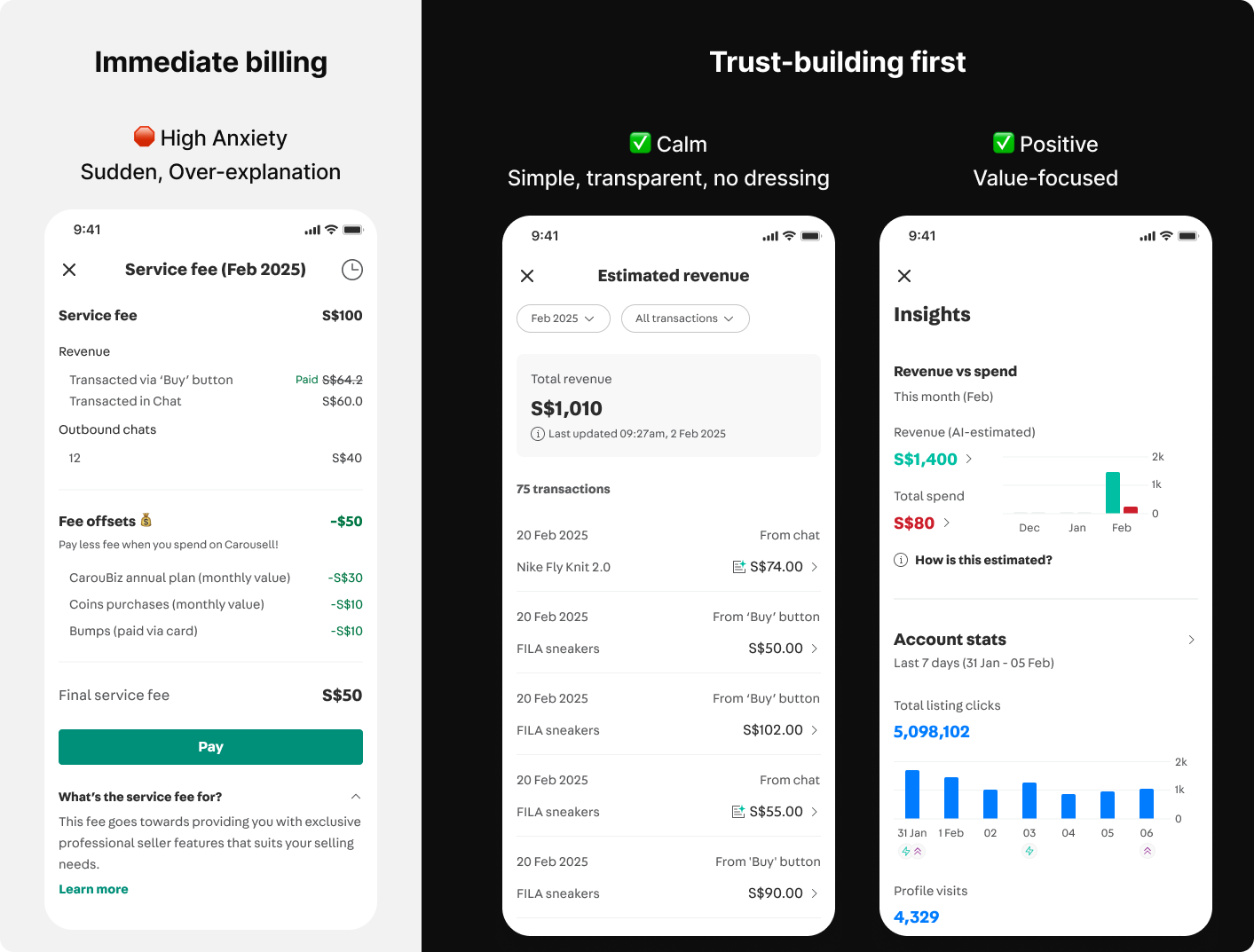
Research highlightsAbstract triggered defensiveness and fears and errors. When users can concretely see their revenue, cost and audit AI-detected transaction, they stopped seeing a 'fee' and started seeing a 'bookkeeping tool.'
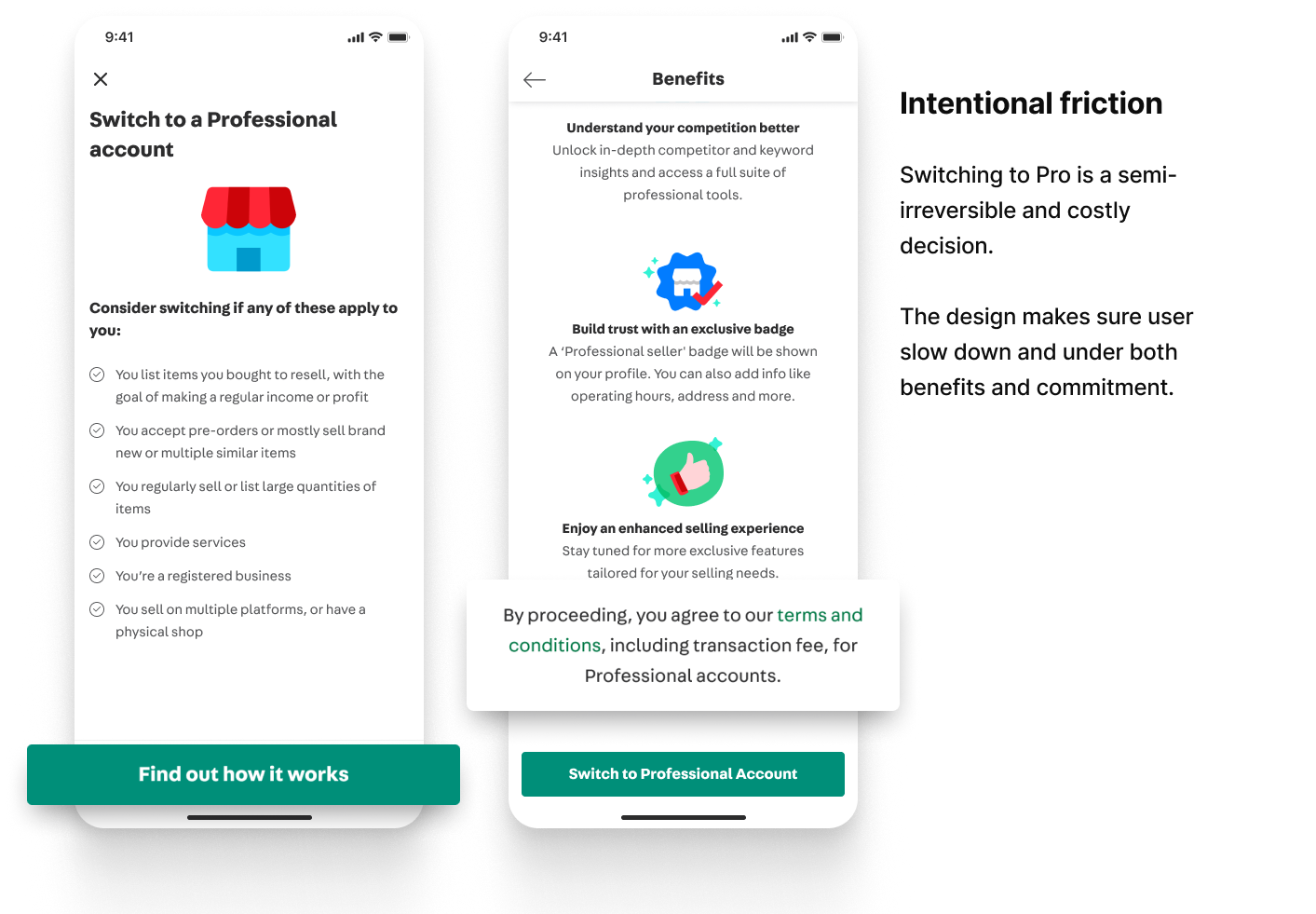
Solution highlightIntroduce intentional friction for irreversible action
Solution highlightTransaction history: An existing seller’s pain point today is the manual effort to track transactions happened in chat. By making AI-detected transition visible to sellers, this is no longer a ‘black box’ or ‘surveillance’, but a useful bookkeeping tool.
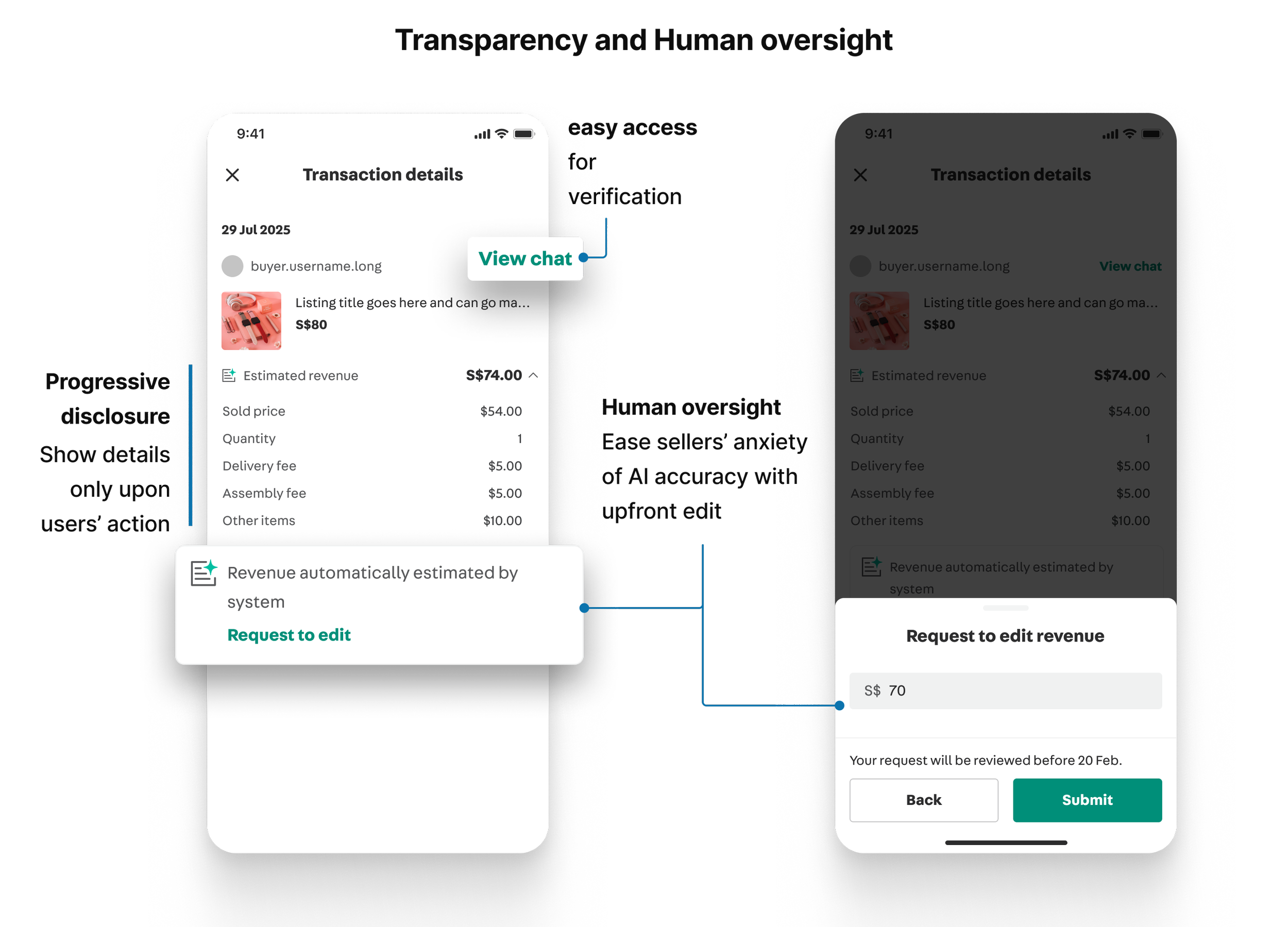
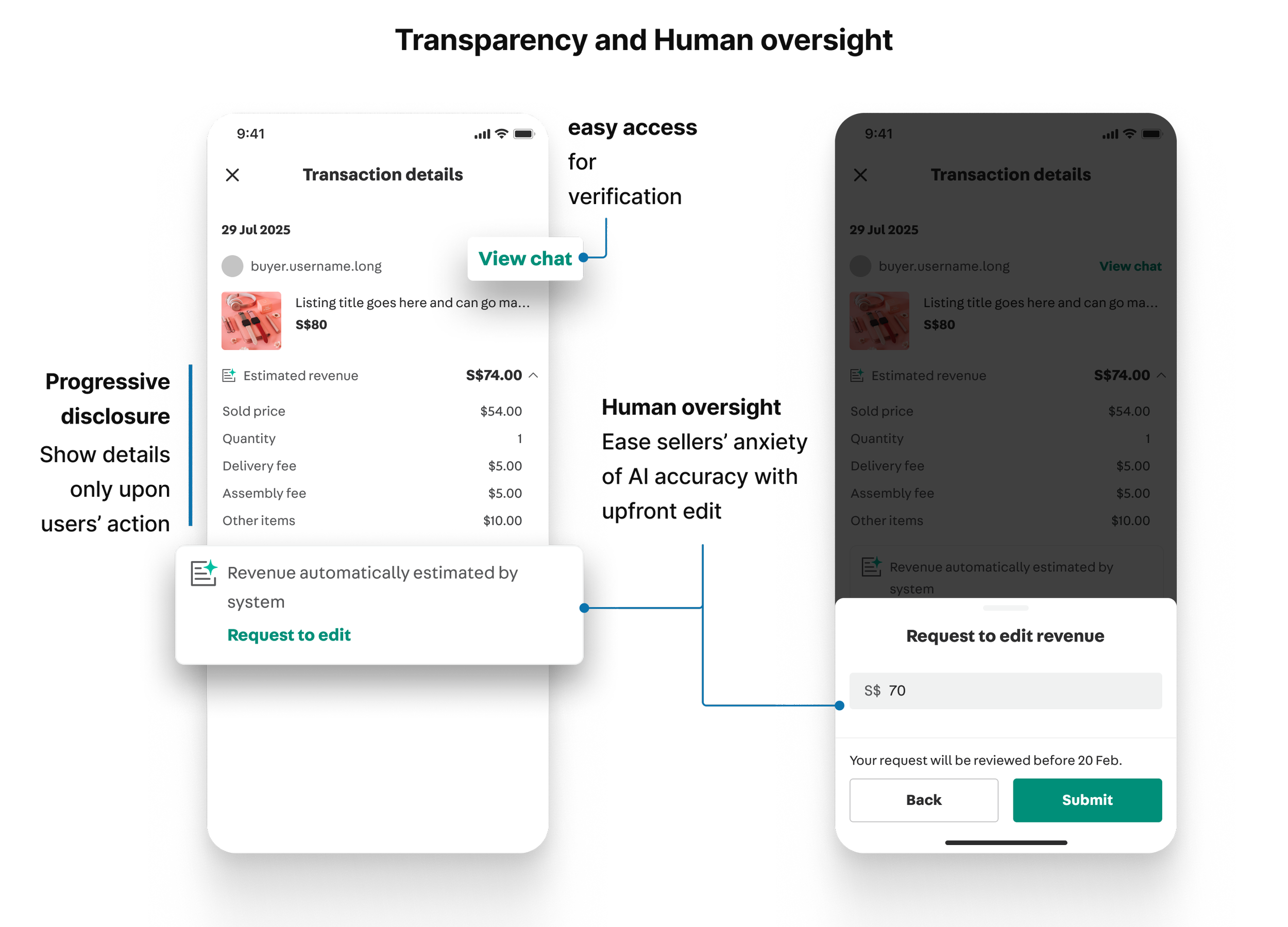
To reduce sellers’ anxiety over AI inaccuracy, details for verification and edit function are easily accessible.
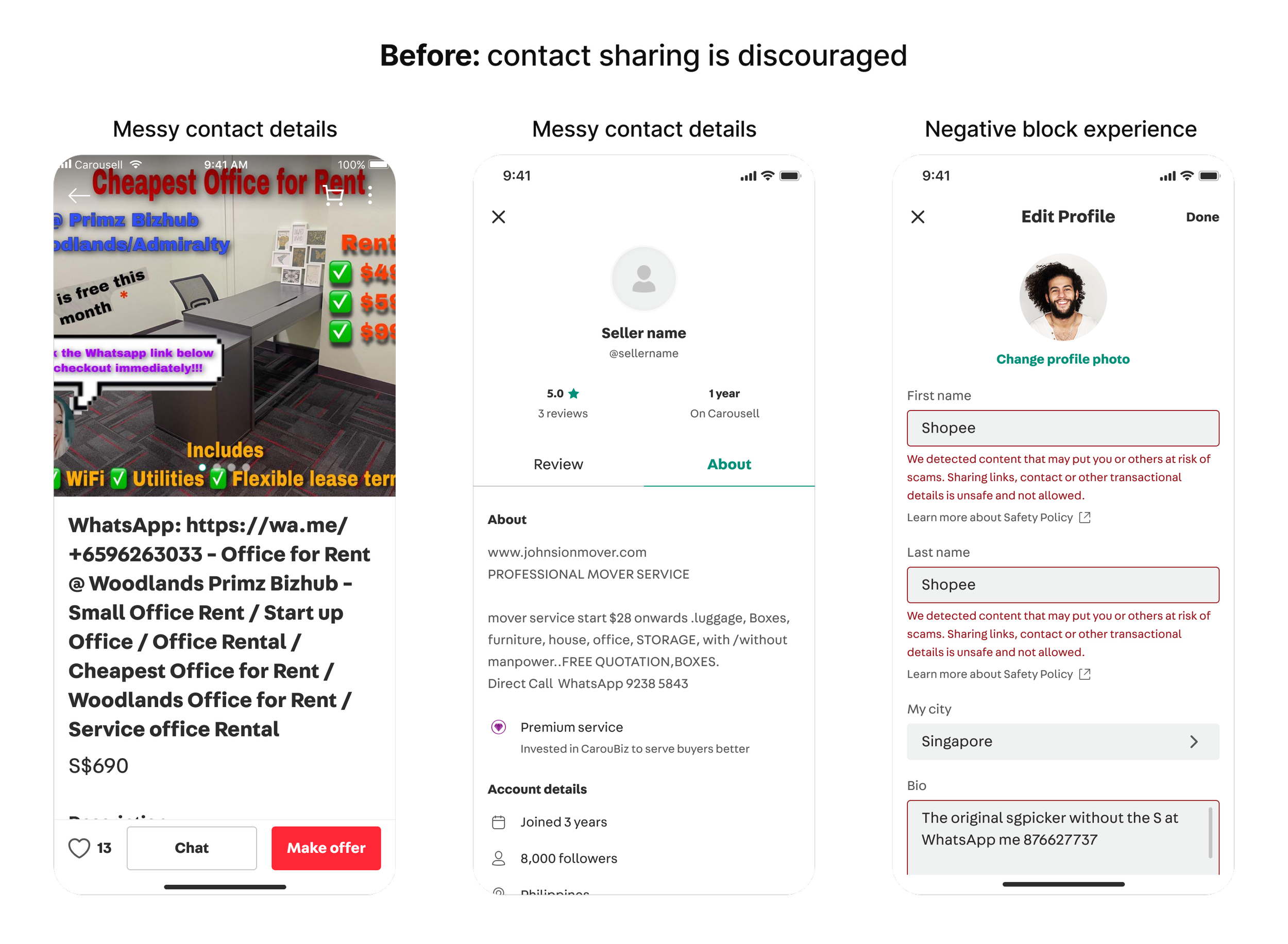
Solution highlightBefore, sellers use loopholes to display their contact details in messy ways on listings and profiles. When these surfaces are moderated, they experienced a negative block experience.
Solution highlightAfter, sellers can proudly show and convenient share their contact details in common places such as chat, listing and profile.
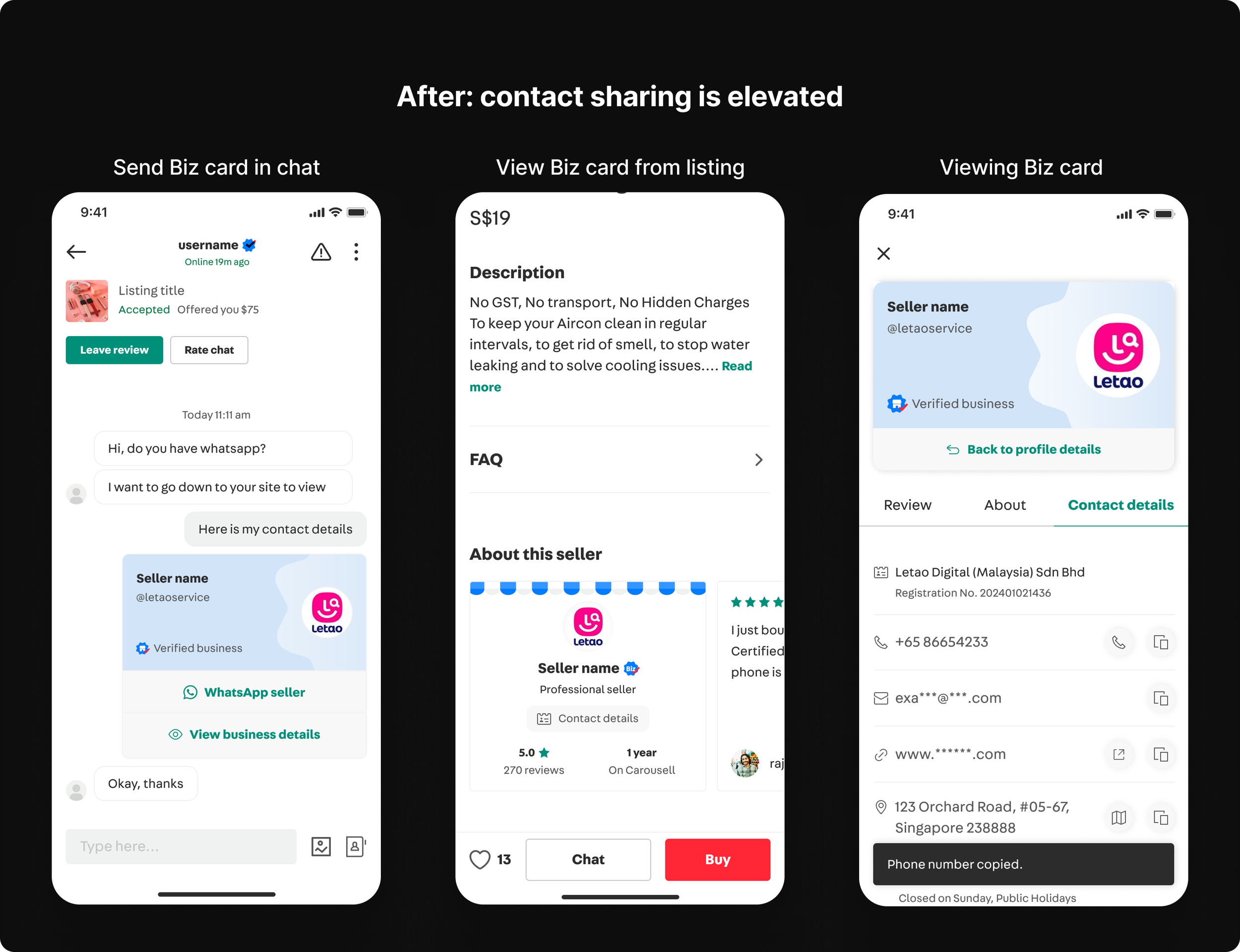
Cultural nuanceThe card uses a water-inspired pattern to signal legitimacy, flow, and abundance in the local context, shifting the interaction from “rule enforcement” to “professional identity.”

Impact
Beside the revenue impact, we saw positive user experience metrics: 30% early payment and 70% conversion. Minimal dispute rate, as compared to our older policy using a more familiar tech. This proves that the design has helped users to see value and trust invisible AI tech behind detection.
Generated 0→ 5-figure MRR in 1 quarter, with minimal dispute, beating conversion forecasts.Pivoted GTM strategy from "getting fair share" to "value-first" based on research
You are at the last case study. Read a WIP case